
Topical hub
Electric Bike Safety and Maintenance Guide UK
UK-focused e-bike safety and maintenance guidance covering batteries, charging, storage, brakes, punctures and routine checks.
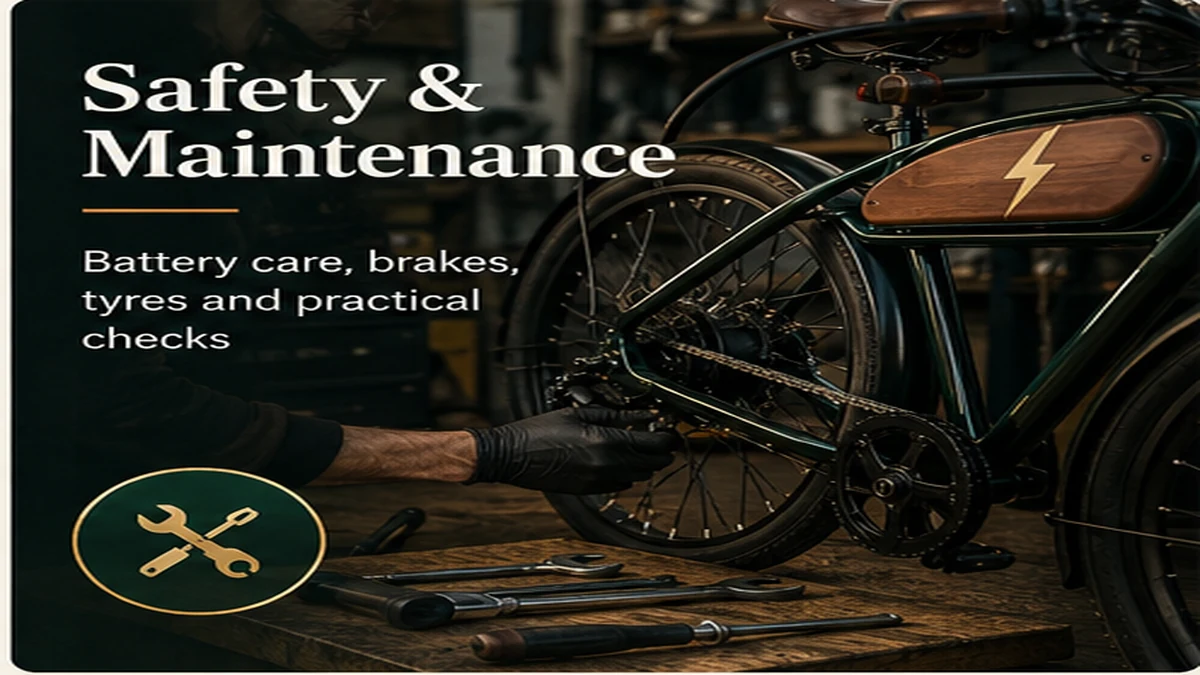
Quick facts
- Use the charger supplied or recommended by the manufacturer.
- Do not ignore swelling, heat, smells or impact damage.
- Check brakes, tyres and fasteners before regular use.
- Store batteries away from heat, moisture and escape routes.
- Keep maintenance records for warranty and resale clarity.
Guides in this hub
What are the battery safety basics?
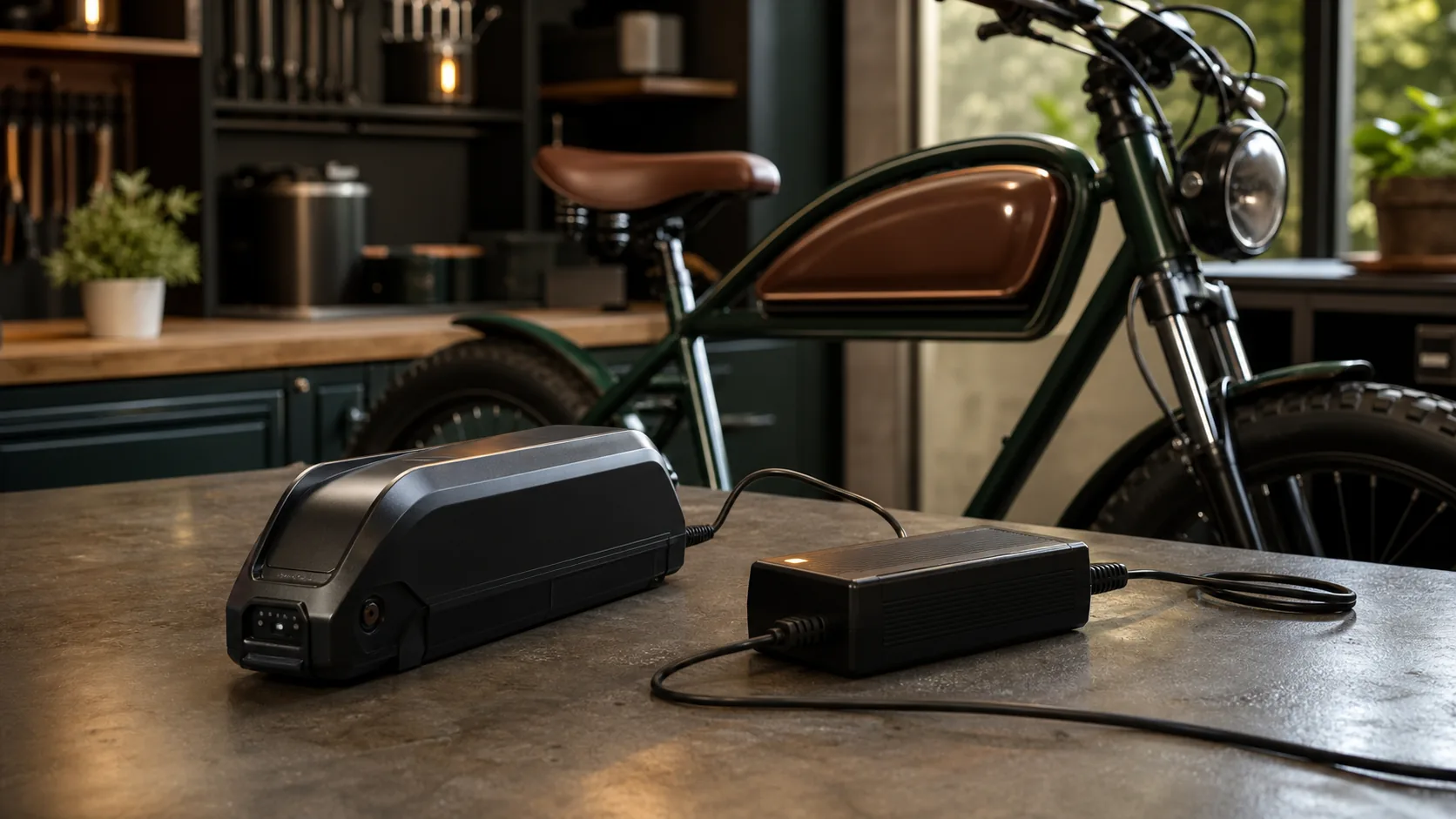
Lithium e-bike batteries should be treated as valuable electrical equipment. Charge them on a clear surface, away from soft furnishings, and unplug the charger when the battery is ready.
If a battery has been dropped, submerged, crushed or starts behaving strangely, stop using it. A working battery is not automatically a safe battery.
The UK Fire and Rescue Service has highlighted e-bike battery fires as a growing concern, particularly with cheap replacement batteries and non-original chargers. Always buy batteries and chargers from the original manufacturer or an authorised UK supplier.
What should you check before riding?
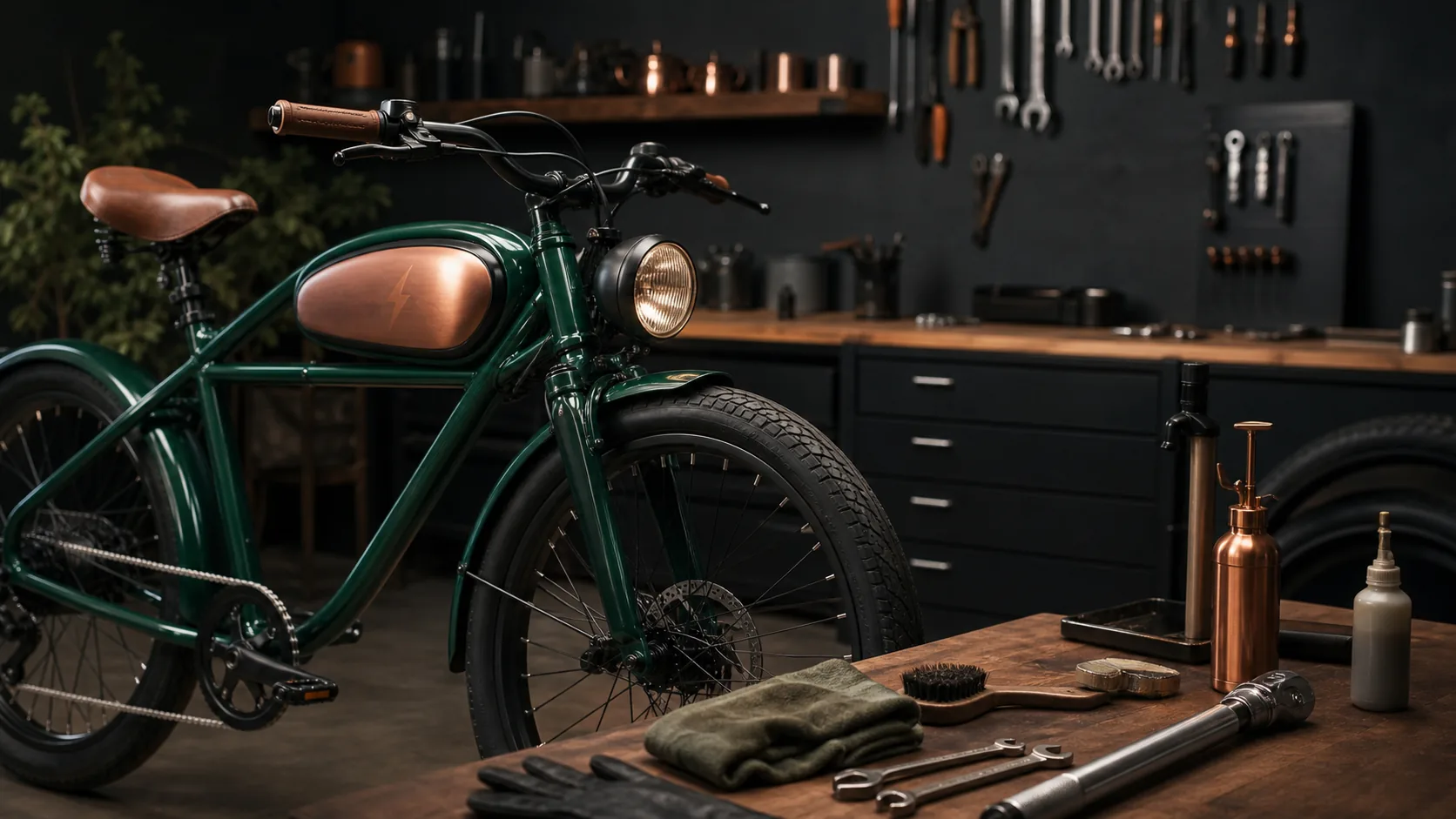
Before regular journeys, check tyre pressure, brake feel, wheel security, lights, chain condition and whether anything is rubbing or loose. Heavier bikes place more demand on brakes and tyres.
A short check can prevent long walks home. It also helps you notice gradual changes, such as soft brakes, loose spokes or a battery that no longer holds charge as expected.
- Tyre pressure: check by hand or gauge before every commute.
- Brakes: squeeze both levers and confirm firm, even stopping.
- Lights: test front and rear, check battery charge.
- Chain: ensure it runs smoothly without noise or stiffness.
- Battery: confirm charge level covers your planned journey plus margin.
- Bolts: check mudguard, rack, stand and wheel fixings.
How should you store a retro e-bike?
Store the bike where it is dry, stable and secure. If the battery is removable, follow the manufacturer's storage charge guidance and keep it away from direct heat or freezing conditions.
For winter storage, clean the bike, dry it properly, inflate tyres, protect the chain and check battery charge periodically. Avoid leaving a lithium battery completely empty for long periods.
If you live in a flat or terraced house, consider a wall-mounted hook, folding stand or ground anchor. Retro e-bikes are heavier than standard bicycles, so your storage solution needs to handle 25 to 35 kilograms safely.
Maintaining your e-bike in wet UK weather
UK weather means your e-bike will regularly face rain, road salt and puddles. After wet rides, wipe down the frame, dry the chain, and check that water has not collected around the battery contacts or controller housing.
Apply chain lubricant designed for wet conditions and re-apply every 100 to 200 miles or after heavy rain. Keep mudguards fitted to reduce spray damage to the drivetrain and braking surfaces.
Which jobs need a specialist?
Tyres, chains, brake pads and basic adjustments are familiar cycle maintenance jobs for many riders. Battery repair, controller diagnosis and wiring faults are different and should be handled by competent specialists.
Do not open a battery pack to save money. Replacement from a reputable supplier is usually the safer route.
Related guides
 Electric Bike Battery Safety UKUK e-bike battery safety guidance covering charging, storage, warning signs, damaged batteries and safer buying habits.How to Charge an E-Bike SafelyPractical e-bike charging safety advice for UK homes, including chargers, location, supervision, warning signs and storage.
 Electric Bike Maintenance ChecklistA practical UK e-bike maintenance checklist covering tyres, brakes, chain, battery, bolts, lights and when to use a mechanic.Used Retro Electric Bike Checklist UKA UK checklist for buying a used retro electric bike, covering legality, battery health, charger, frame, brakes, theft checks and test rides.
FAQs
What is the single most important safety rule when charging an electric bike at home?
Never charge your e-bike battery while sleeping or unattended, and never charge it in escape routes such as hallways or stairwells. Always use the manufacturer-approved charger and plug directly into a mains socket rather than an overloaded extension lead, as advised by Electrical Safety First and the National Fire Chiefs Council.
Can I ride my retro electric bike in heavy UK rain?
Yes, quality road-legal e-bikes are built to IP54 or IP65 water resistance standards, handling rain and surface spray easily. However, never submerge the motor or battery in deep standing water or flood puddles, and never clean your e-bike with a high-pressure jet wash, which forces moisture past motor seals.
How often should I replace brake pads on a heavy retro e-bike?
Because retro e-bikes weigh 25kg to 32kg and travel at higher average speeds, brake pads wear out much faster than on standard pushbikes. Inspect pad thickness every 500 miles (or every 2-3 months for daily commuters). Replace pads when the friction material wears down below 1.5mm.
How should I store my e-bike battery during the winter months?
Bring the battery indoors and store it at room temperature (between 10°C and 20°C). Never leave the battery outside in freezing temperatures or completely depleted. Store it at around 50% to 70% charge state if not riding for several weeks, and top it up once a month.
What are the warning signs that an e-bike battery is failing or unsafe?
Warning signs include a swollen or bulging casing, excessive heat during charging, unusual hissing sounds, chemical odours, failure to reach full voltage, or rapid loss of charge. If you notice any of these signs, disconnect the charger immediately, move the battery outdoors away from flammable materials, and contact a specialist.