Safety and Maintenance
Electric Bike Brake Maintenance: Pads, Rotors and Cables
How to keep retro e-bike brakes sharp, spot wear early and avoid weak stopping power in UK conditions.
Quick facts
- A heavier bike asks more of every brake.
- Noise, longer lever travel and rubbing are early clues.
- Wet roads make weak brakes feel worse.
- Pad, rotor, cable and hose condition all matter.
- Keep oil and cleaner away from braking surfaces.
Why brake maintenance matters
A heavier e-bike takes more effort to stop, especially in wet weather or on longer descents. Good brake maintenance is not cosmetic; it is one of the most important parts of daily safety.
If a retro frame looks solid but the brakes feel weak, the bike may still be the wrong choice for your route.
Signs that pads or rotors are wearing out
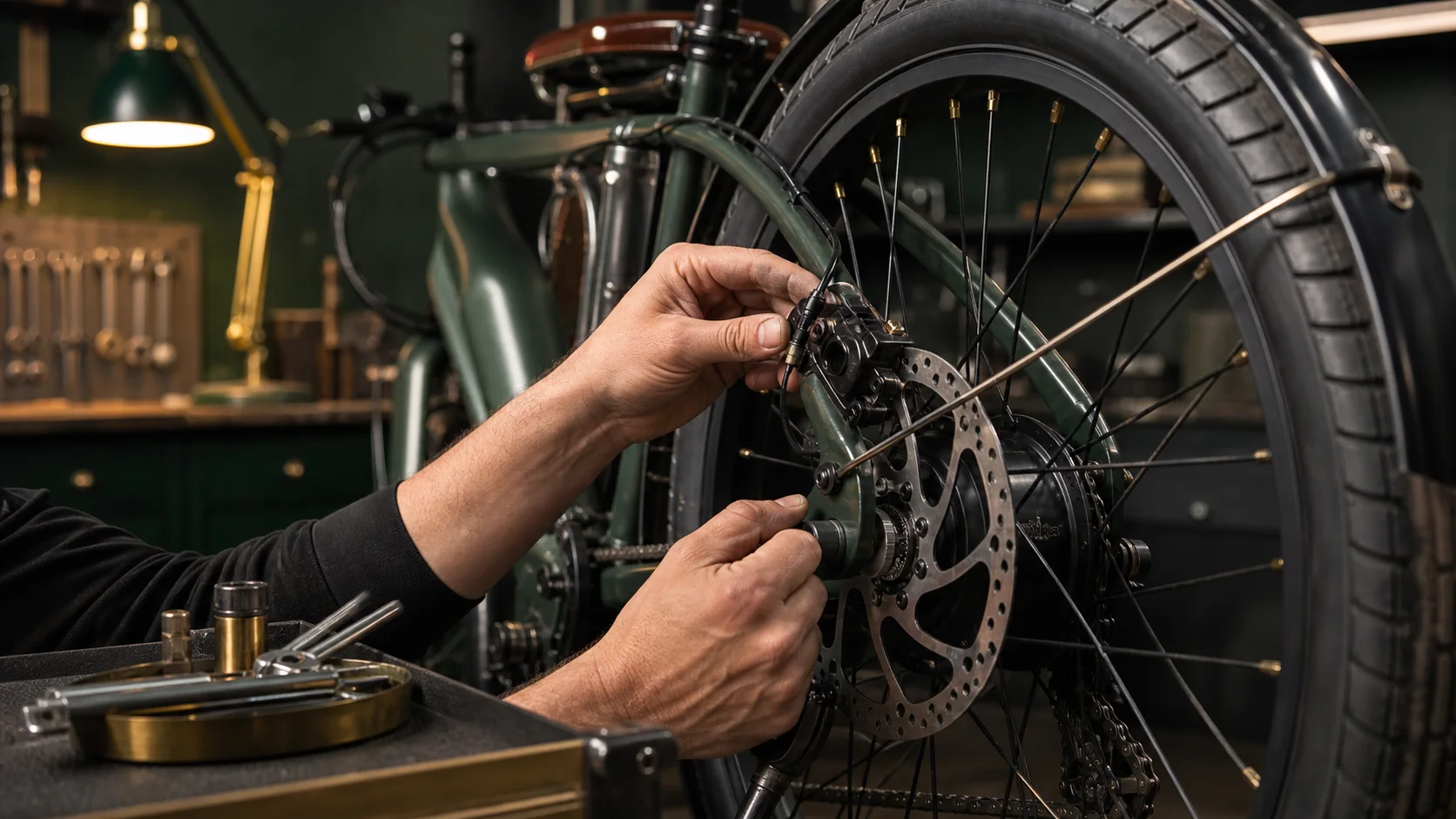
Listen for squealing, grinding or a scraping sound that does not go away after a clean. Check for longer lever travel, uneven pull between the front and rear brake, and visible pad wear.
On disc systems, look at rotor condition as well as pad thickness. Scored, bent or contaminated rotors can make a fresh pad feel poor.
- Squeal or grinding that repeats on every ride.
- Lever movement that feels longer or softer than before.
- Visible pad material getting thin.
- Rotor rub that does not go away after alignment.
- Uneven braking between front and rear wheels.
Cables, hoses and adjustment
Mechanical brakes can feel vague if cables stretch, corrode or are badly routed. Hydraulic brakes can feel inconsistent if air gets into the system or fluid maintenance is overdue.
Do not spray lubricants near braking surfaces. If the brake surface becomes oily, clean it carefully with the right product or ask a technician to inspect it.
When to stop riding and get help
If a brake pulls to one side, feels spongy, leaks fluid, makes loud grinding noises or leaves you unsure about stopping distance, stop using the bike until it is inspected.
A quick adjustment is one thing. Riding with broken braking performance on a heavy retro e-bike is not worth the risk.
Useful next steps
Start with the UK electric bike rules hub and the Electric Bike Safety and Maintenance Guide UK.
FAQs
What is the first sign a brake needs attention?
Usually longer lever travel, more noise or a less confident stop.
Are hydraulic brakes always better?
They often feel stronger and more consistent, but they still need proper maintenance.
Why do heavier e-bikes wear pads faster?
Because the brakes have to turn more weight into heat every time you slow down.
What should I never spray near the brakes?
Oil, chain cleaner and anything that can leave a residue on pads or rotors.
When should I stop riding?
If the bike does not stop with normal lever pressure, or the brake feels spongy, noisy or uneven.
Related guides
 Electric Bike Safety and Maintenance Guide UKUK-focused e-bike safety and maintenance guidance covering batteries, charging, storage, brakes, punctures and routine checks.Electric Bike Maintenance ChecklistA practical UK e-bike maintenance checklist covering tyres, brakes, chain, battery, bolts, lights and when to use a mechanic.
 Electric Bike Tyre Pressure Guide UKHow to choose and check tyre pressure on heavier retro e-bikes for comfort, grip and range.
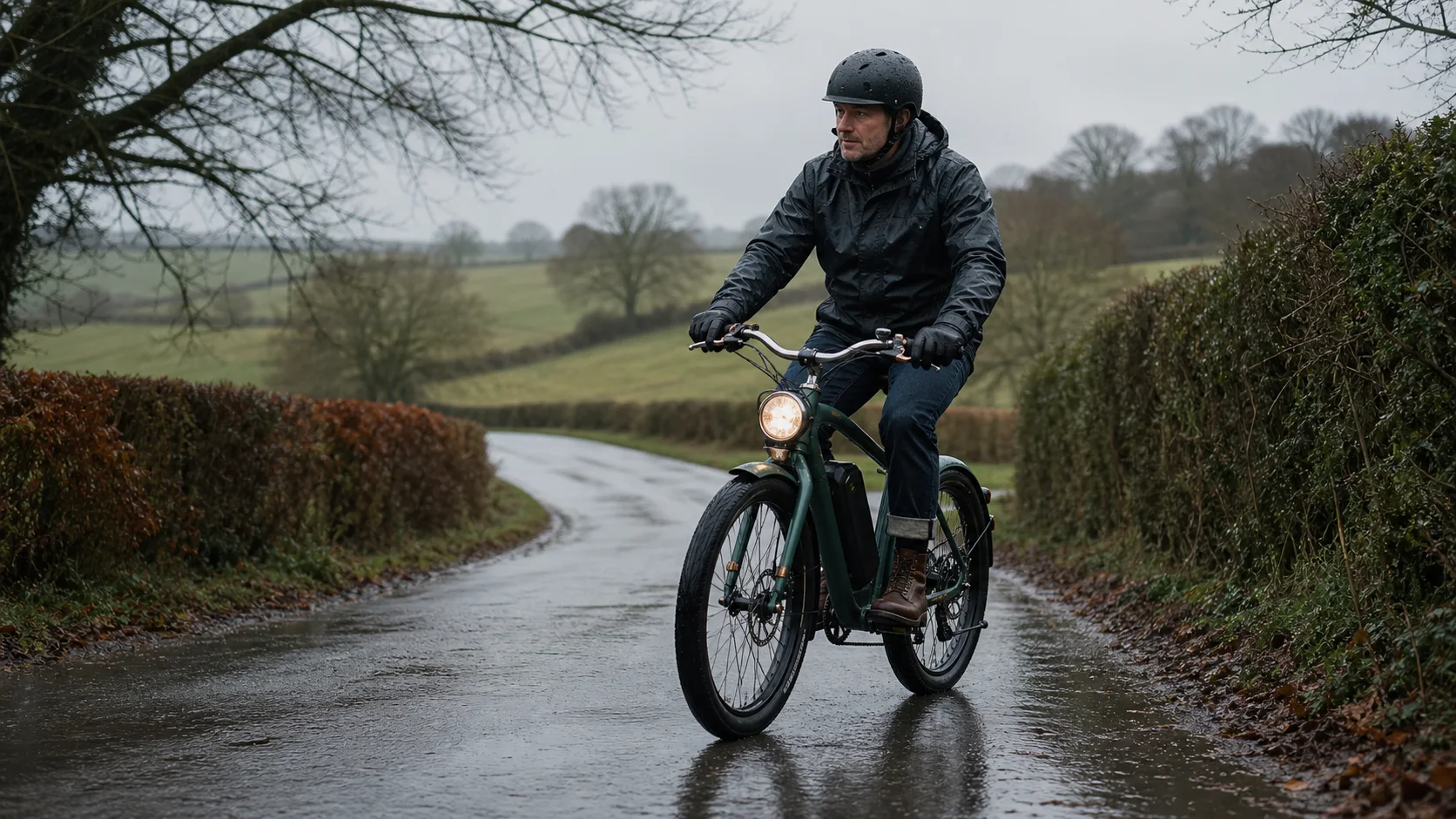 Electric Bike Riding in Rain and Wet WeatherPractical UK advice for riding a retro electric bike in rain, puddles and winter road conditions.