
Safety and Maintenance
Electric Bike Riding in Rain and Wet Weather
Practical UK advice for riding a retro electric bike in rain, puddles and winter road conditions.
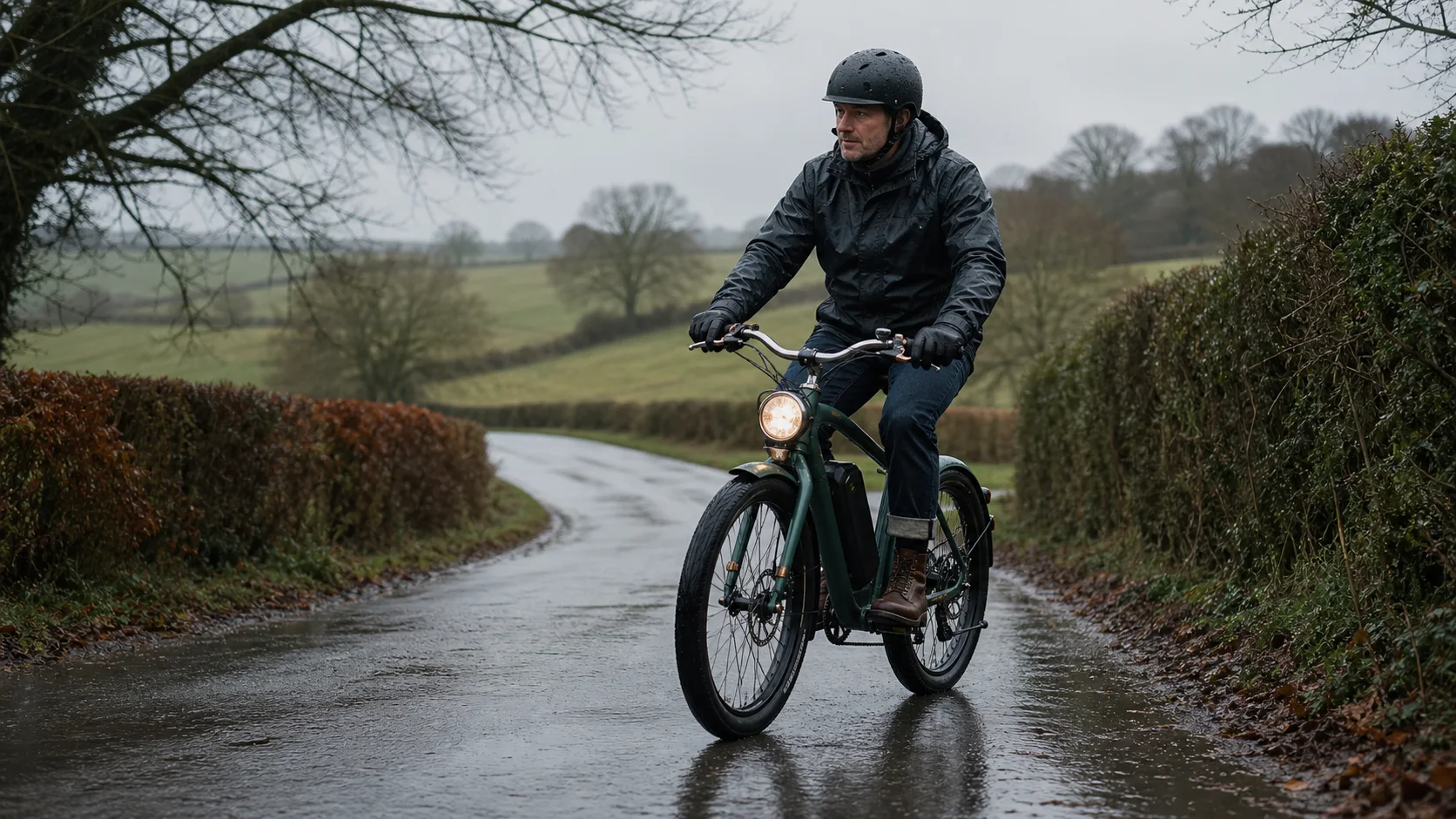
Quick facts
- Braking distances grow on wet roads.
- Leaves, paint lines and metal covers get slippery.
- Lights and visibility matter more in poor weather.
- Dry the bike after wet rides when you can.
- Do not charge a soaked battery or charger.
Before you leave in wet weather
Check brakes, lights, tyre pressure and battery security before setting off. If the bike is already dirty or wet from a previous ride, give it a quick visual check for damage and rubbing parts.
Mudguards, decent tyres and a clean drivetrain make wet rides much more manageable.
How to ride more safely in the rain
Brake earlier and more gently than you would on a dry road. Slow down for painted lines, manhole covers, tram tracks, wet leaves and puddles that hide potholes.
Keep your movements smooth. Sudden turns, sharp braking and abrupt acceleration are more likely to slip a tyre on wet surfaces.
What to do after a wet ride
Wipe the bike down, dry the chain and check that water has not gathered around the battery contacts, charger port or controller area. If the bike has been splashed heavily, allow it to dry before charging.
Wet rides can wash away chain lube and expose weak braking or tyre problems that were hidden in dry weather.
Winter habits that help
Keep a habit of checking pressure, tread and brake response more often through the colder months. Wet weather and cold storage can make a bike feel different from one week to the next.
A retro bike that looks good in the dry still needs realistic weather habits if it is going to be daily transport.
Useful next steps
Start with the UK electric bike rules hub and the Electric Bike Safety and Maintenance Guide UK.
FAQs
Can an electric bike motor get ruined in UK winter rain?
Standard UK rainfall and surface splashes will not harm an IP54 or IP65 rated e-bike motor or battery. Damage occurs when an e-bike is submerged in floodwaters or cleaned with a high-pressure jet wash, which penetrates the rubber bearings and cable grommets.
How should I dry and protect my e-bike after riding on salted winter roads?
Road salt is highly corrosive to aluminium alloy rims, spoke nipples, and electrical connectors. Wipe the frame and rims with a damp cloth, dry thoroughly with a microfibre towel, and apply a corrosion inhibitor (such as ACF-50 or Muc-Off MO-94) to metal parts, keeping it well clear of brake discs.
Why does my e-bike battery drain faster in cold winter weather?
Lithium-ion chemistry slows down in temperatures below 5°C, increasing internal electrical resistance. You can expect a temporary 20% to 30% reduction in battery range during British winter. Bringing the battery indoors to warm up to room temperature before charging and riding restores efficiency.
What tyre tread is best for wet UK tarmac and greasy autumn roads?
Tyres with water-channelling sipes and softer rubber compounds (such as Schwalbe Marathon Plus or Big Ben) provide far better wet-grip on painted white lines, drain covers, and wet autumn leaves than hard-compound semi-slick or deep knobby off-road tyres.
Related guides
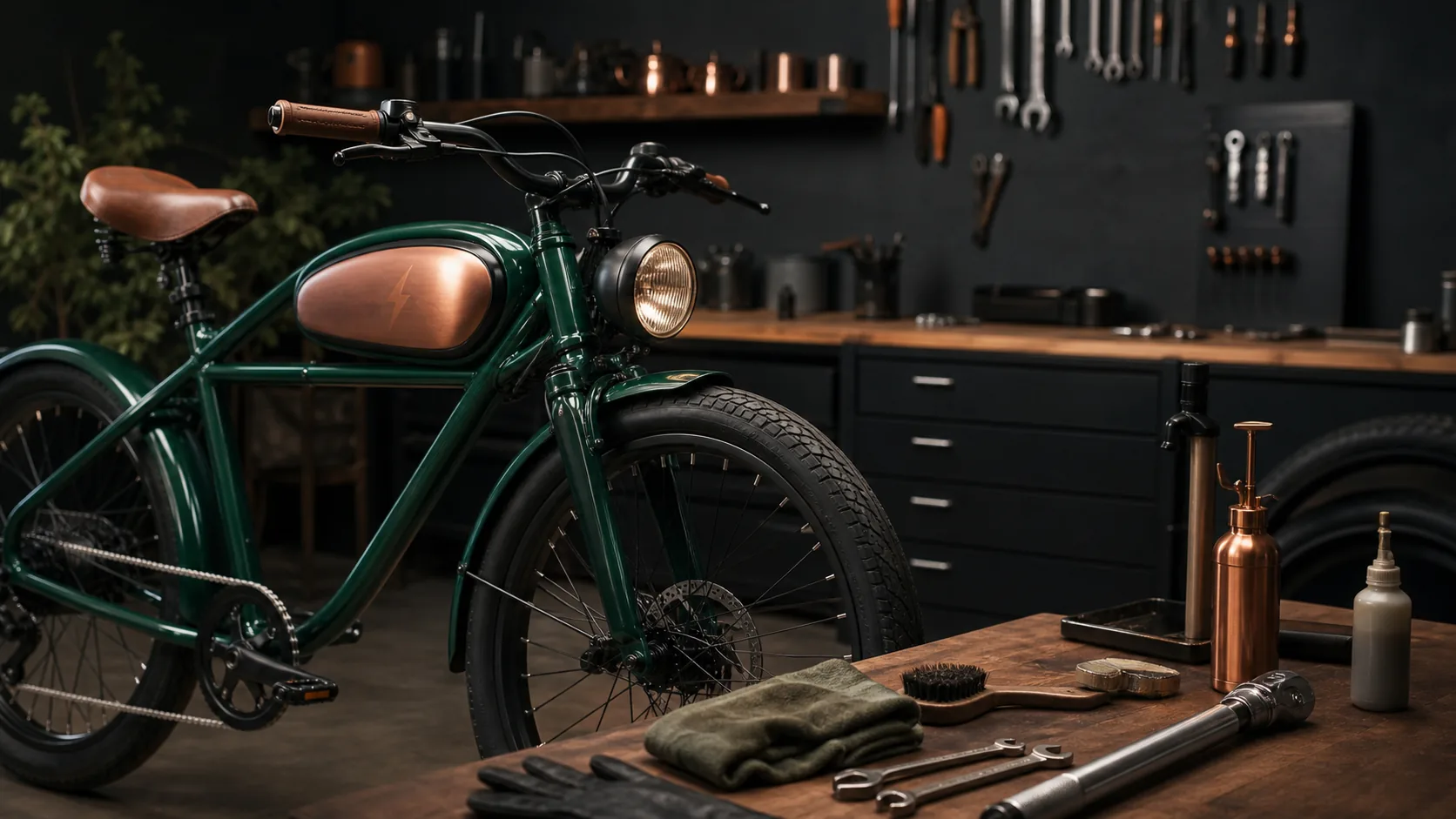 Electric Bike Safety and Maintenance Guide UKUK-focused e-bike safety and maintenance guidance covering batteries, charging, storage, brakes, punctures and routine checks.
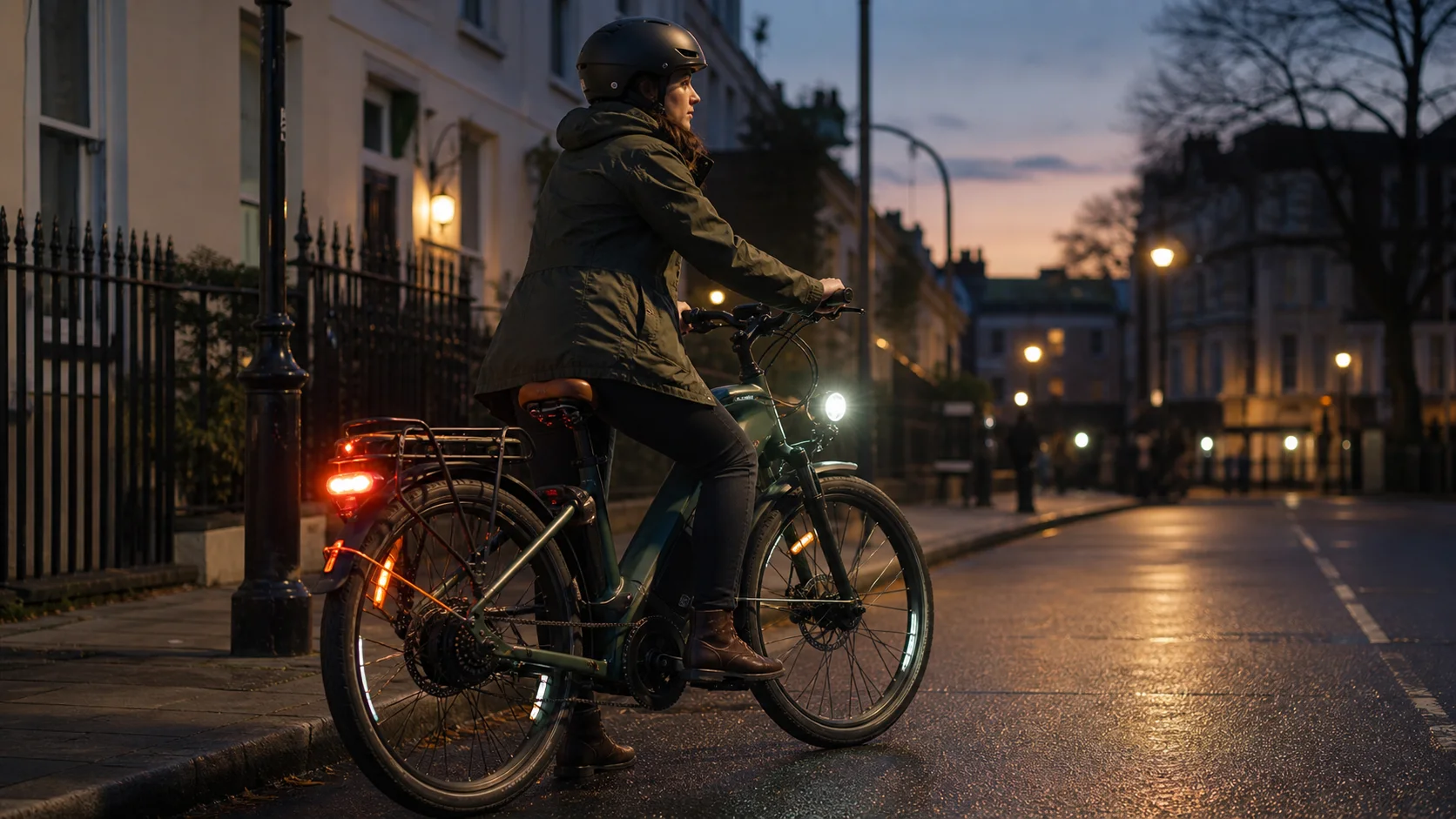 Electric Bike Lights and Reflectors UKWhat UK riders should check for lights, reflectors and visibility on a retro electric bike.
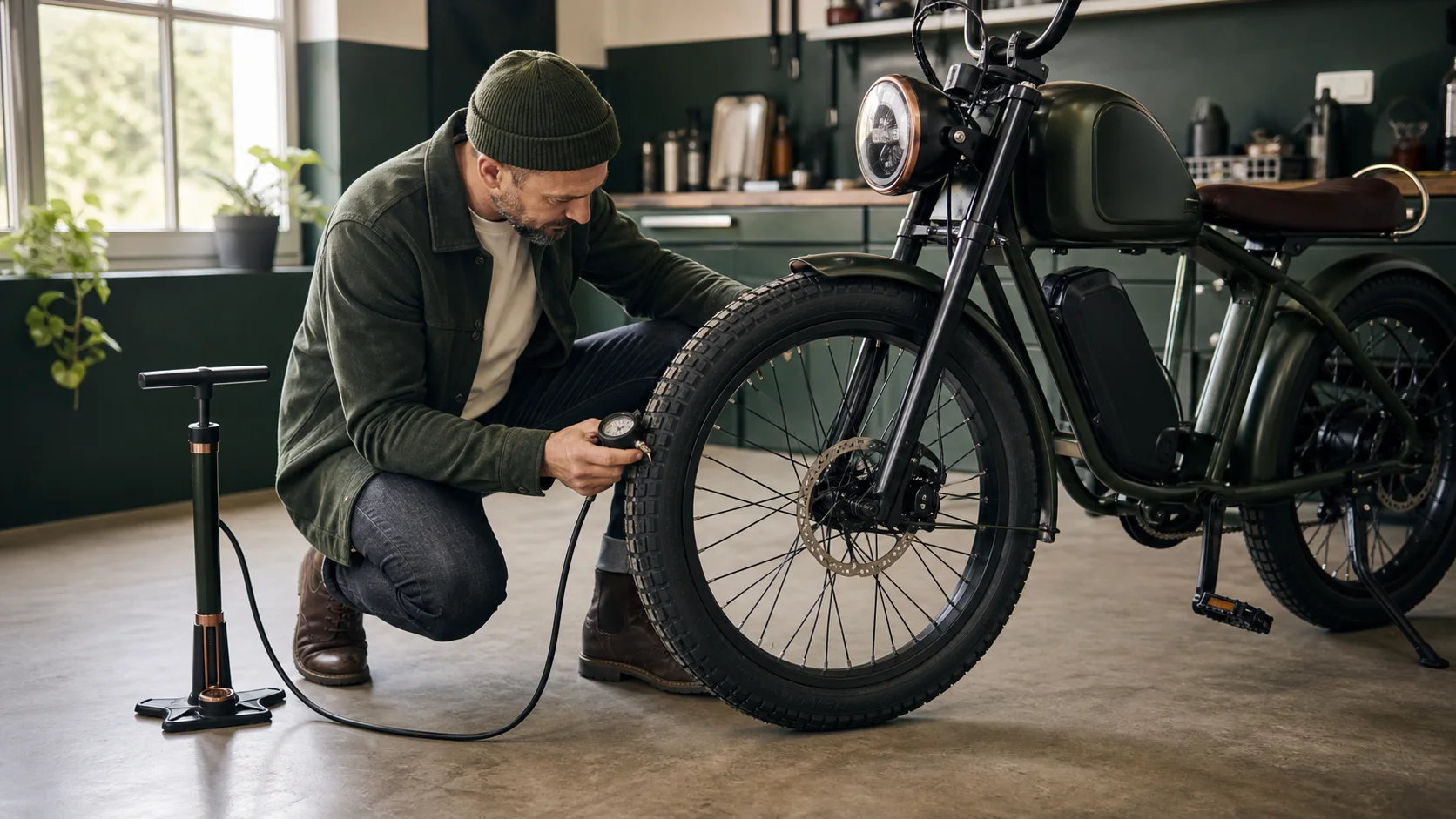 Electric Bike Tyre Pressure Guide UKHow to choose and check tyre pressure on heavier retro e-bikes for comfort, grip and range.
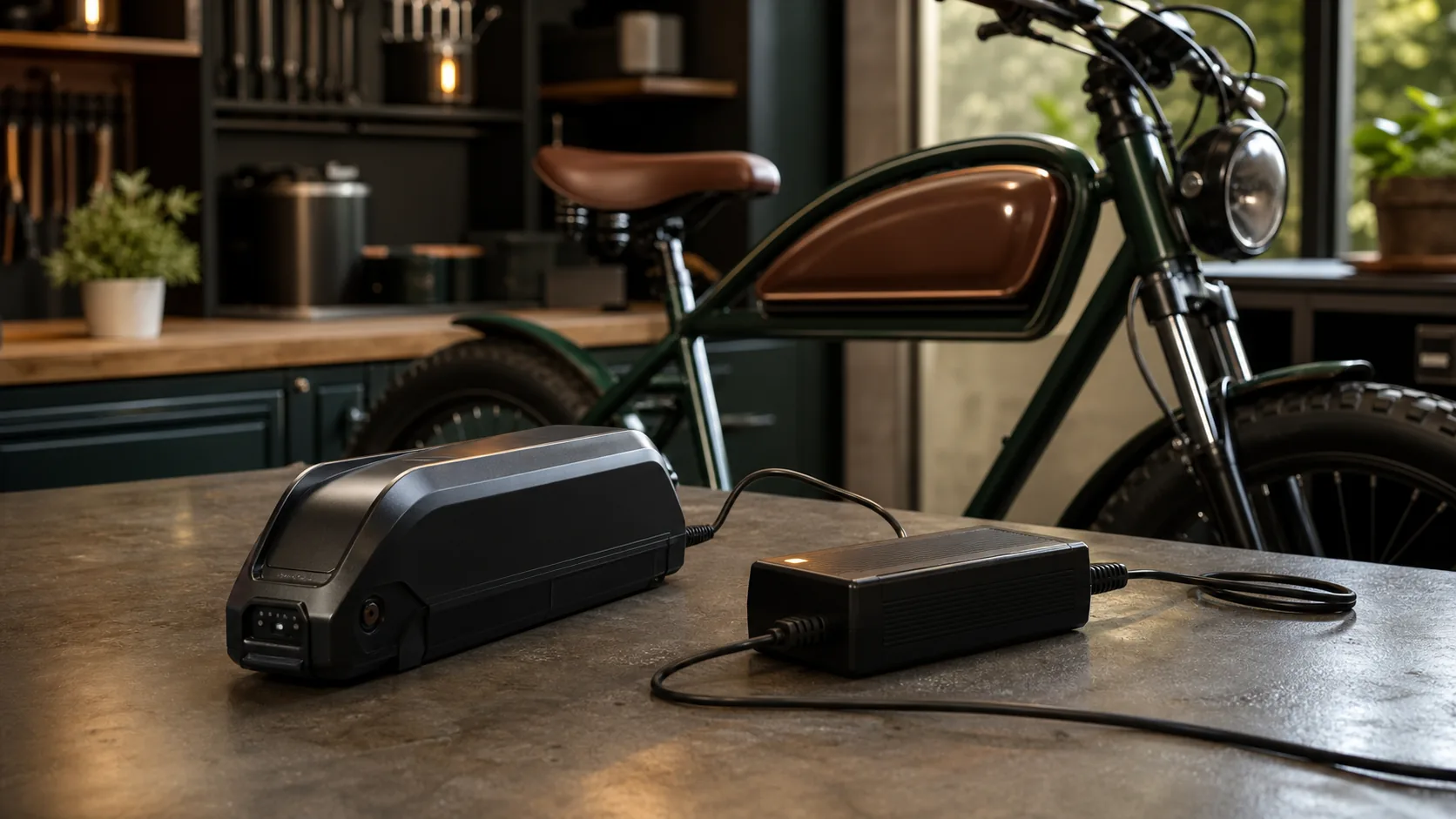 Electric Bike Battery Safety UKUK e-bike battery safety guidance covering charging, storage, warning signs, damaged batteries and safer buying habits.