Safety and Maintenance
Electric Bike Lights and Reflectors UK
What UK riders should check for lights, reflectors and visibility on a retro electric bike.
Quick facts
- Visibility matters as much as outright brightness.
- Front and rear lights should work every time you ride in poor light.
- Reflectors help from side angles and in low light.
- Battery lights need charging and a routine check.
- Classic frames sometimes need flexible mounting solutions.
Why visibility matters
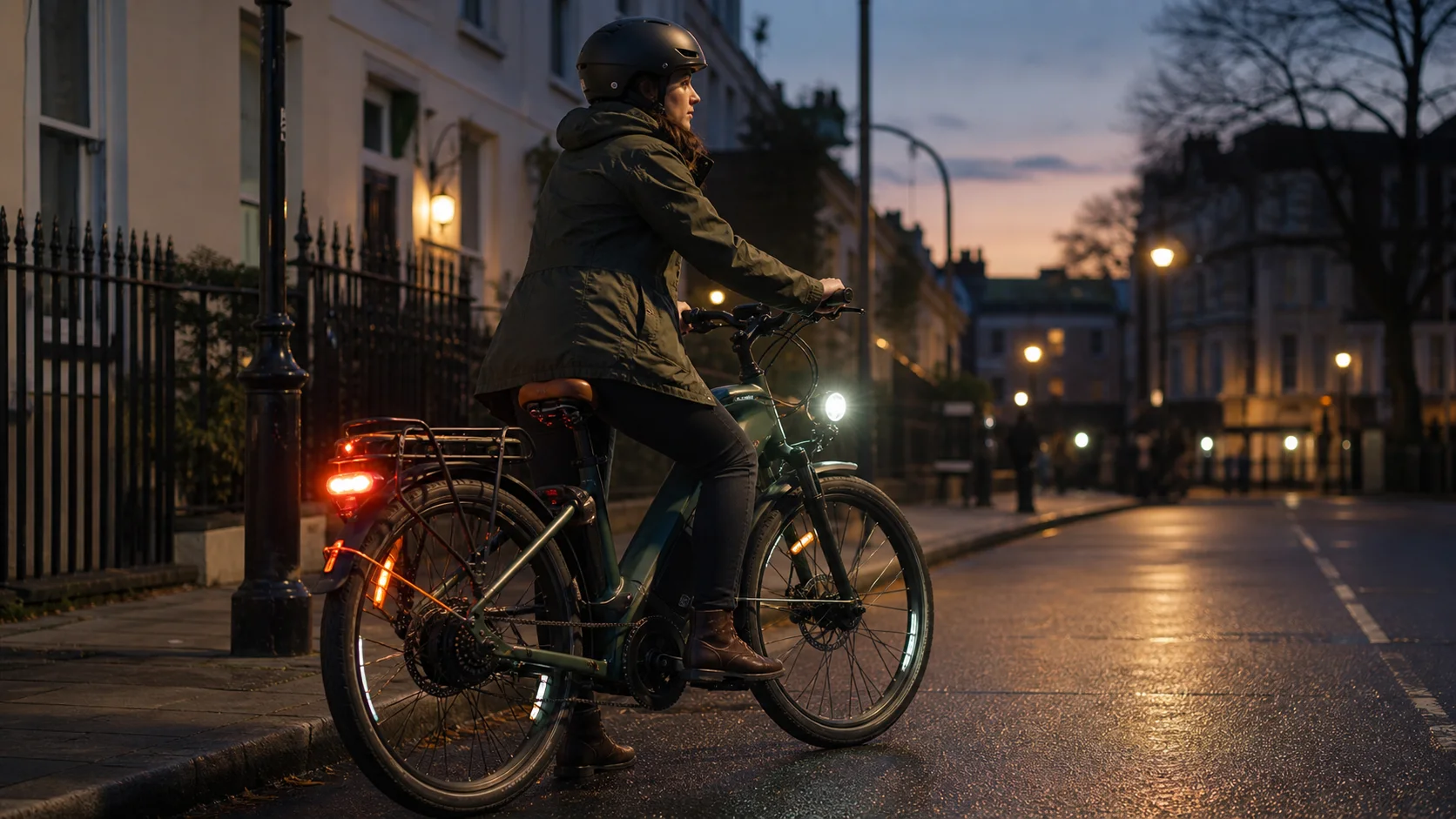
A retro e-bike can look distinctive in daylight and still disappear quickly in dark or rainy conditions. Good lighting and reflectors help other road users judge your position and movement earlier.
The goal is not only to see the road but to be seen clearly by traffic from front, rear and side angles.
What to fit or inspect
Check that the front light is bright enough for the roads you ride and that the rear light is easy to notice. Reflectors on wheels, pedals or frame areas can add useful side visibility.
On older-style frames, fitment can be awkward. Choose hardware that stays secure, does not rattle and can be recharged or replaced easily.
A simple pre-ride check
Press the light switch, confirm both lights work and make sure the beam is aimed sensibly. Check battery charge before a longer commute so you are not caught out halfway home.
If a light flickers or a mount has started to loosen, treat that as a maintenance job, not a cosmetic issue.
When to be extra careful
Dusk, dawn, rain and overcast winter afternoons can all make visibility worse than you expect. If the weather is turning, switch the lights on early rather than waiting until it feels dark.
A reflective jacket or bag cover is useful, but it does not replace working bike lights.
Useful next steps
Start with the UK electric bike rules hub and the Electric Bike Safety and Maintenance Guide UK.
FAQs
What are the legal lighting requirements for cycling after dark in the UK?
Under the Road Vehicles Lighting Regulations 1989 (RVLR), riding between sunset and sunrise requires a white front light (minimum 4 candela or modern equivalent), a red rear light, a red rear reflector (BS 6102/3 compliant), and amber pedal reflectors on the front and rear of each pedal.
Are flashing bike lights legal on UK roads?
Yes. Since 2005, flashing front and rear lights are legal in the UK, provided they flash at a steady frequency between 60 and 240 flashes per minute and emit at least 4 candela of light. A steady front beam is still recommended on unlit country lanes to illuminate the road surface ahead.
Can I replace classic pedal reflectors if my retro bike has moto-style footpegs?
UK law strictly requires four amber pedal reflectors (front and back of both pedals) when riding on public roads between sunset and sunrise. If your retro e-bike has aftermarket metal platform pedals or footpegs without reflectors, you are technically not compliant with RVLR; fit reflective ankle bands or pedal reflector adapters.
How powerful should a front light be for dark UK unlit roads?
For well-lit city streets, a 100 to 200 lumen (or 30 lux) front light is sufficient to be seen. For unlit canal towpaths, country lanes, and rural UK roads, choose a front light with at least 500 to 800 lumens (or 70 to 100 lux) with an anti-glare StVZO beam cut-off to avoid blinding oncoming drivers.
Related guides
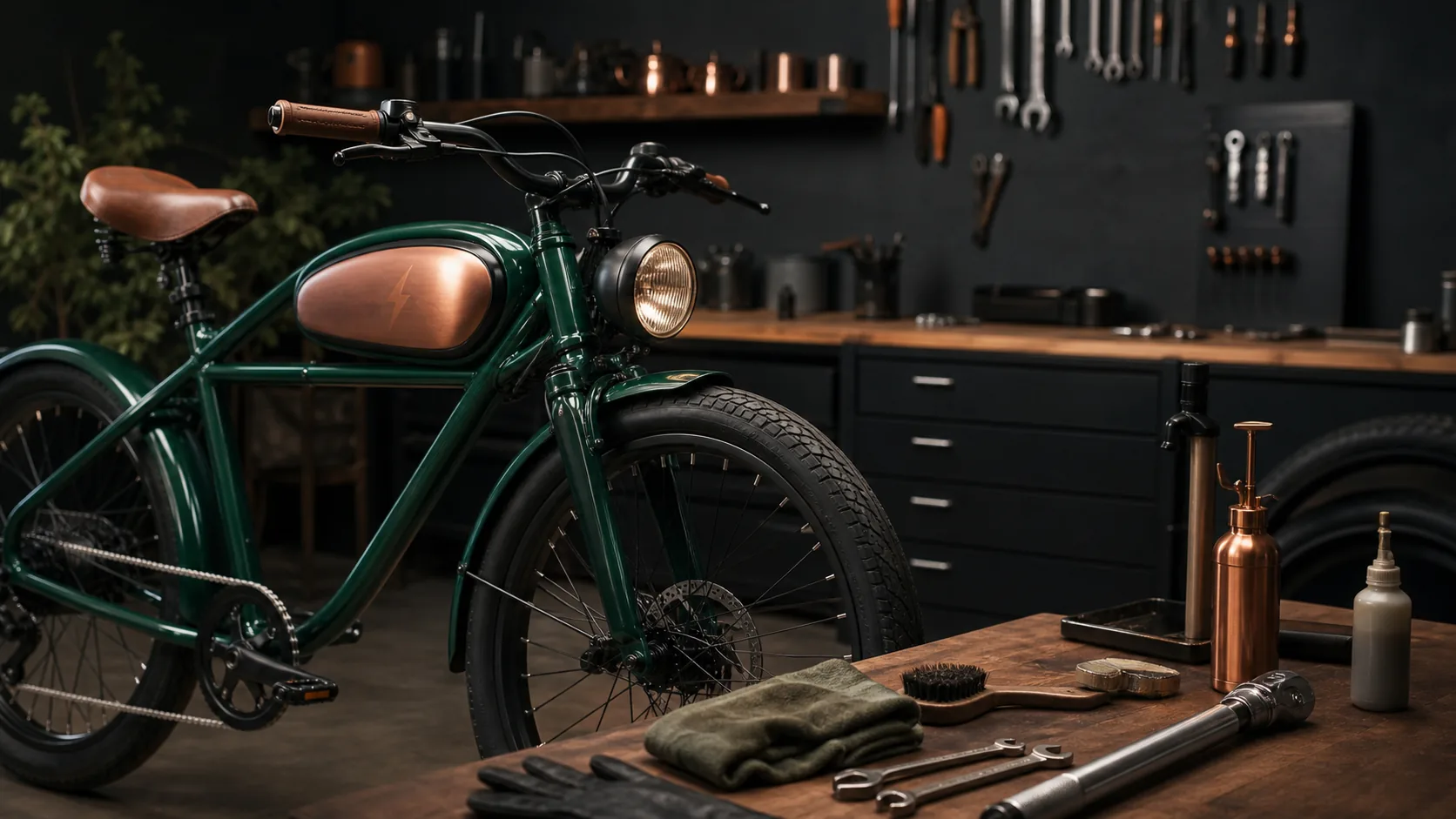 Electric Bike Safety and Maintenance Guide UKUK-focused e-bike safety and maintenance guidance covering batteries, charging, storage, brakes, punctures and routine checks.
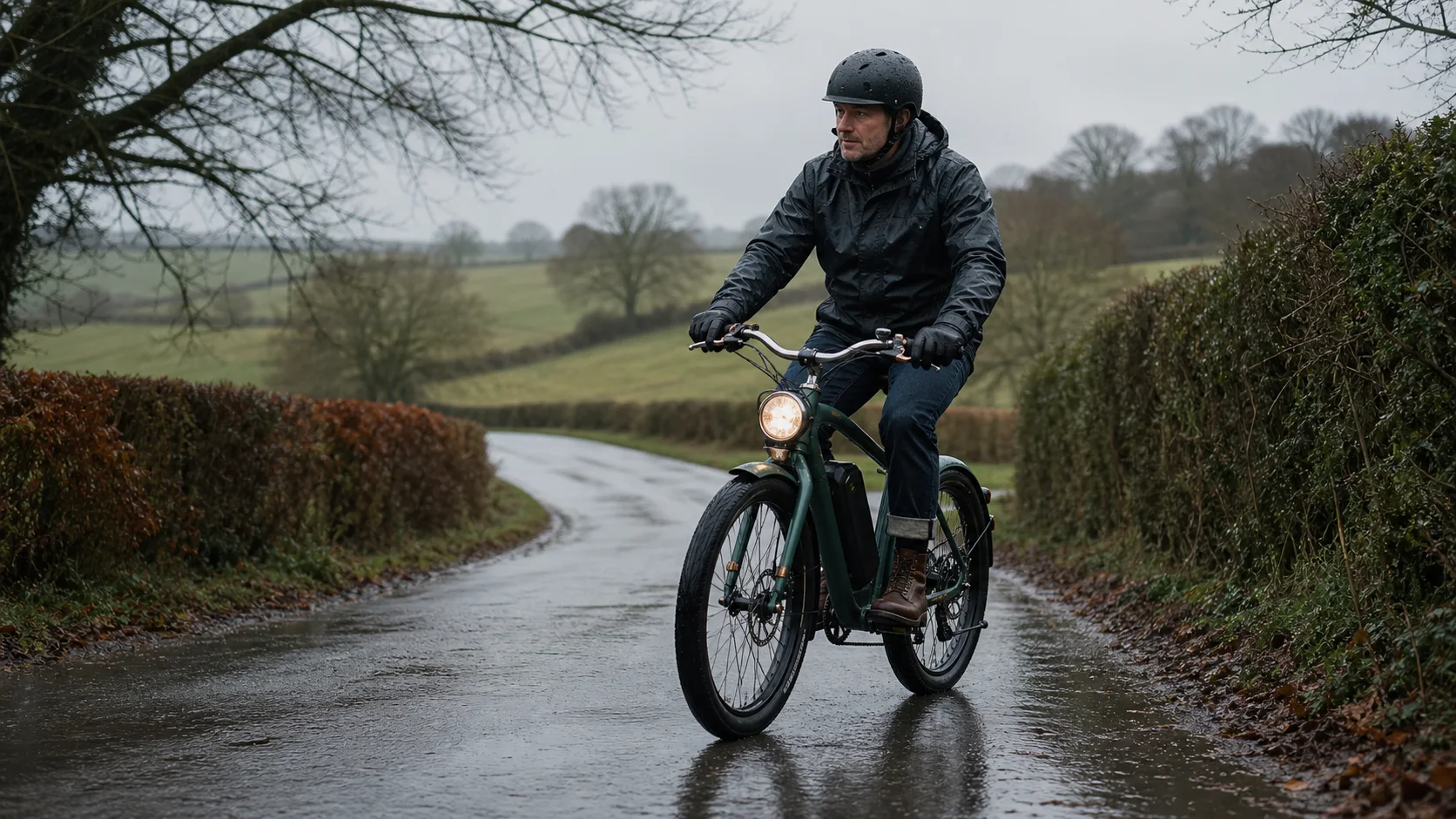 Electric Bike Riding in Rain and Wet WeatherPractical UK advice for riding a retro electric bike in rain, puddles and winter road conditions.Electric Bike Maintenance ChecklistA practical UK e-bike maintenance checklist covering tyres, brakes, chain, battery, bolts, lights and when to use a mechanic.
 Electric Bike Brake Maintenance: Pads, Rotors and CablesHow to keep retro e-bike brakes sharp, spot wear early and avoid weak stopping power in UK conditions.