Safety and Maintenance
Electric Bike Tyre Pressure Guide UK
How to choose and check tyre pressure on heavier retro e-bikes for comfort, grip and range.
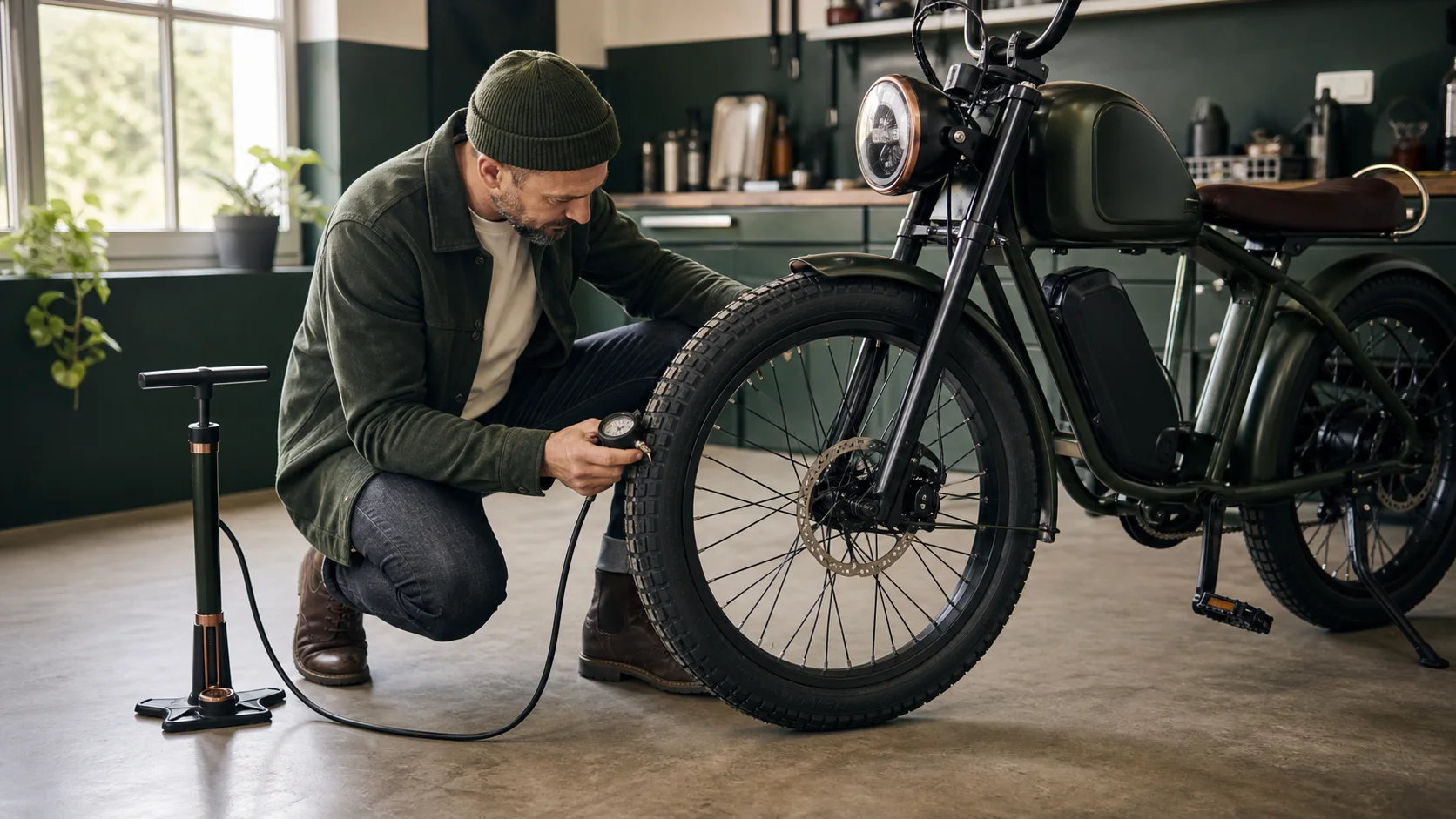
Quick facts
- Start with the maker's recommended range.
- Too soft feels vague, slow and more pinch-flat prone.
- Too hard feels harsh and can reduce grip.
- Cold weather usually lowers tyre pressure.
- Fat tyres and commuter tyres need different numbers.
What tyre pressure changes
Tyre pressure affects comfort, rolling resistance, grip and puncture risk. It also changes how predictable the bike feels through corners and over broken road surfaces.
On a heavy retro e-bike, soft tyres can make the bike feel sluggish and can put more stress on the battery and tyres over time.
How to choose a starting pressure
Start with the range printed on the tyre sidewall or in the manual. That is the safest reference if you are unsure where to begin.
If you carry heavy shopping, ride rough roads or use a wider tyre, start near the practical middle of the range and adjust in small steps.
What too soft and too hard feel like
Too soft usually feels squirmy in corners, slower on the road and more likely to pinch-flat when you hit a pothole hard. Too hard usually feels harsh, skittish and less forgiving over rough surfaces.
If the bike feels vague when you push it around the driveway or through a turn, the rear tyre is often the first place to check.
Adjusting for UK conditions
Cold weather lowers pressure, so tyres can feel softer in winter even if nothing is wrong. Wet roads also reward a sensible pressure that balances grip and comfort rather than chasing maximum firmness.
If your bike has fat tyres, do not copy the numbers from a narrow commuter bike. The right range may be very different.
Simple routine to follow
Check both tyres with a gauge before regular rides, especially if the bike has been stored for a few days. If one tyre keeps losing air, inspect for a slow puncture, valve issue or pinch damage.
A tyre that is repeatedly underinflated is not just uncomfortable; it can shorten the life of the tyre and rim.
Useful next steps
Start with the UK electric bike rules hub and the Electric Bike Safety and Maintenance Guide UK.
FAQs
What pressure should I start with?
Use the tyre sidewall or manual range as your starting point, then adjust in small steps.
How do I know if it is too soft?
It usually feels vague in turns, slower on the road and more likely to pinch-flat on sharp impacts.
How do I know if it is too hard?
It usually feels harsh, skittish and less comfortable on broken roads.
Do I need to change pressure in winter?
Often yes, because cold weather lowers pressure and can make the tyre feel softer.
Why does this matter so much on e-bikes?
Because heavier bikes magnify the effects of both underinflation and overinflation.
Related guides
 Electric Bike Safety and Maintenance Guide UKUK-focused e-bike safety and maintenance guidance covering batteries, charging, storage, brakes, punctures and routine checks.Electric Bike Maintenance ChecklistA practical UK e-bike maintenance checklist covering tyres, brakes, chain, battery, bolts, lights and when to use a mechanic.
 Electric Bike Brake Maintenance: Pads, Rotors and CablesHow to keep retro e-bike brakes sharp, spot wear early and avoid weak stopping power in UK conditions.
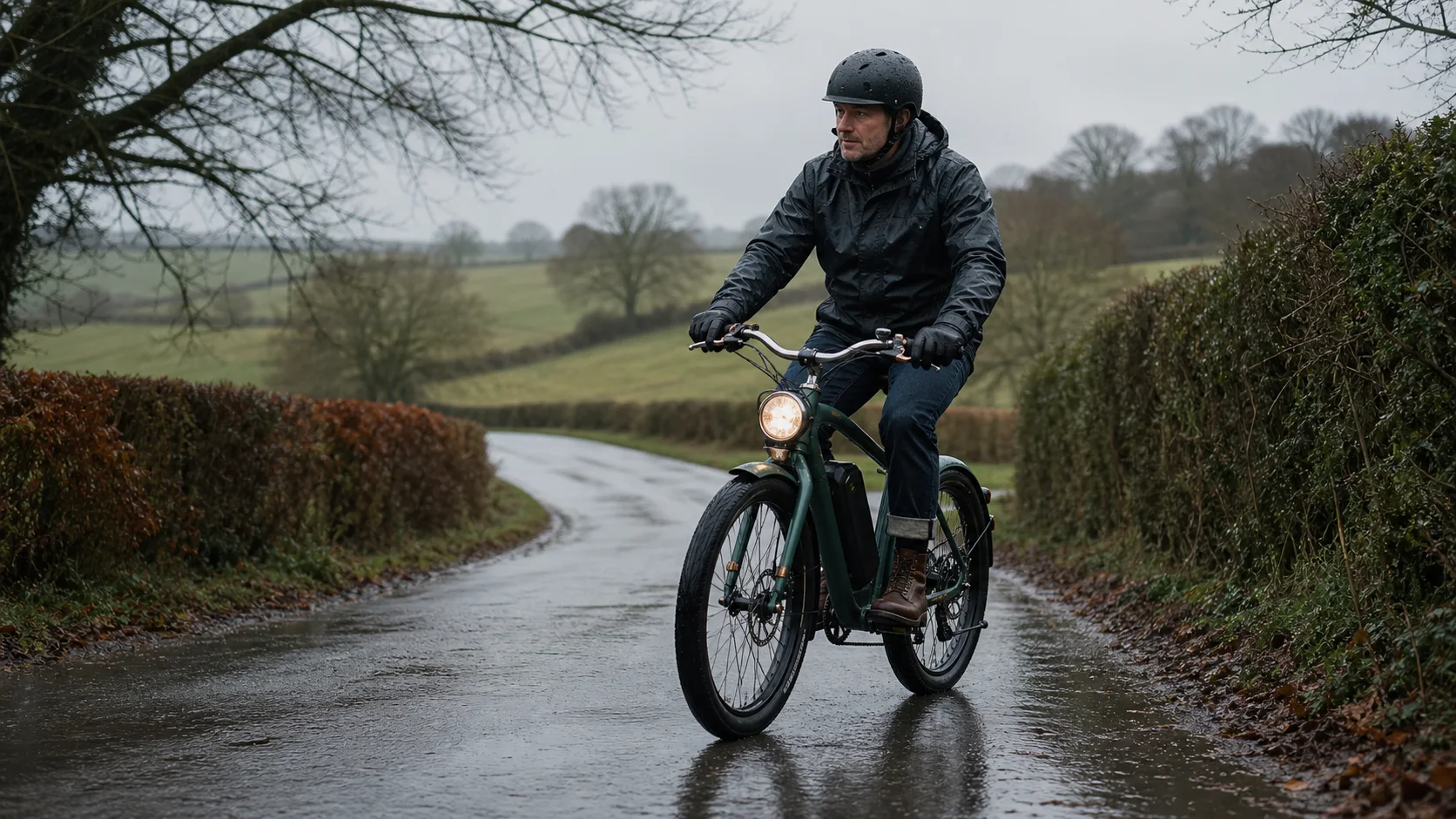 Electric Bike Riding in Rain and Wet WeatherPractical UK advice for riding a retro electric bike in rain, puddles and winter road conditions.