
UK E-bike Law and EAPC Rules
What Is a Road-Legal Electric Bike in the UK?
A plain-English explanation of road-legal electric bikes in the UK, including EAPC rules, pedals, motor limits and speed cut-offs.
Quick facts
- Road legal usually means EAPC compliant for bicycle-style use.
- The seller should be able to show the exact UK specification.
- A legal bike can still be heavy, slow to lift or awkward in traffic.
- If the listing hides throttle or power details, treat it as unfinished.
- Documents matter because they help with warranty and future checks.
Road legal in plain English
For everyday buying decisions, road legal means the electric bike can be used on public roads as a pedal cycle rather than as a registered motor vehicle. The EAPC rules set the boundary, but the rider still has to deal with normal traffic, wet weather and the real weight of the bike once it is loaded with a lock, bag and work gear.
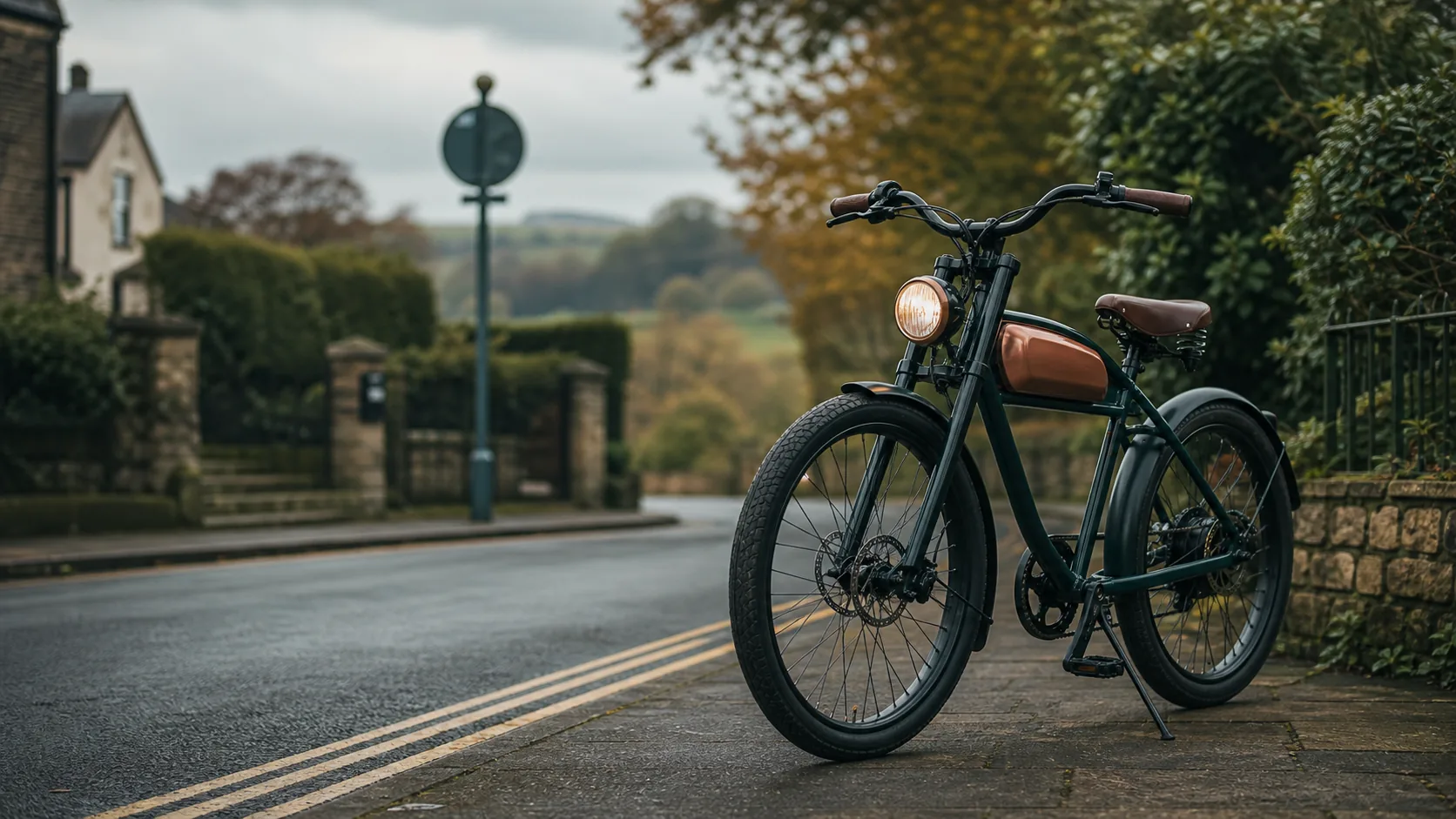
A useful way to think about it is this: a legal bike should behave like a bicycle with assistance, not like a small motorcycle with pedals bolted on for appearance.
The three specification checks
Check for working pedals, a motor rated no higher than 250W continuous power, and assistance that stops at 15.5mph. These checks should be visible in the manual or specification, not just hinted at in the marketing copy.
If you cannot find the model number, rating plate or UK manual, ask for them before you buy. A seller who can answer quickly usually understands the difference between a styled e-bike and a genuinely compliant one.
What road legal does not automatically mean
It does not automatically mean the bike is high quality, safe, well fitted or suitable for your route. A legal bike can still have weak brakes, poor support or an uncomfortable frame.
It also does not mean every throttle, speed setting or imported configuration is allowed. A bike can look normal and still fall outside the rules if the controller or software is set up differently.
Useful documents to keep
Keep the purchase invoice, manual, compliance information, charger details and any written answers from the retailer. These records help with warranty claims, resale and future checks.
If the bike is used, ask for the original charger and proof that the battery has not been modified. A neat folder of paperwork is a better sign than a page of bold claims.
Useful next steps
Start with the UK electric bike rules hub and the UK Electric Bike Rules: 250W, 15.5mph and EAPC Law Explained.
FAQs
What is the fastest way to tell if a listing is vague?
If it mentions style, colour and range but skips the motor rating, assistance cut-off and exact UK model, it is too vague to trust yet.
Can a bike look like a motorbike and still be legal?
Yes. Styling alone does not decide the legal class. The specification and how the bike is supplied for the UK market matter more.
What document should I ask for first?
Ask for the manual or the model specification sheet, because those usually show the continuous power rating, speed cut-off and any throttle notes.
Is a road-legal bike always easy to live with?
No. Some legal bikes are heavy, awkward to lift or poor in rain. Legal status is only the starting point.
What should I notice on day one?
The bike should feel like a bicycle with assistance. If it pulls too hard, feels unstable or keeps behaving oddly after the cut-off, stop and check the setup.
Related guides
UK Electric Bike Rules: 250W, 15.5mph and EAPC Law ExplainedPlain-English UK EAPC rules covering 250W motors, 15.5mph assistance, throttles, licences, insurance and road legality.250W Electric Bike Law UKThe UK 250W electric bike law explained in plain English, including continuous rated motor power, EAPC rules and buyer checks.Electric Bike Speed Limit UK: 15.5mphUnderstand the UK electric bike assistance speed limit, what 15.5mph means, and how it differs from riding speed.Do You Need a Licence for an E-Bike UK?UK electric bike licence rules explained, including EAPCs, rider age, high-power bikes and moped-style alternatives.