
Electric Bike Specifications
UK Electric Bike Charging Cost & Commute Savings Calculator
Calculate the exact cost to charge your retro electric bike in pence based on current Ofgem energy caps, and see your annual savings versus car or public transport.
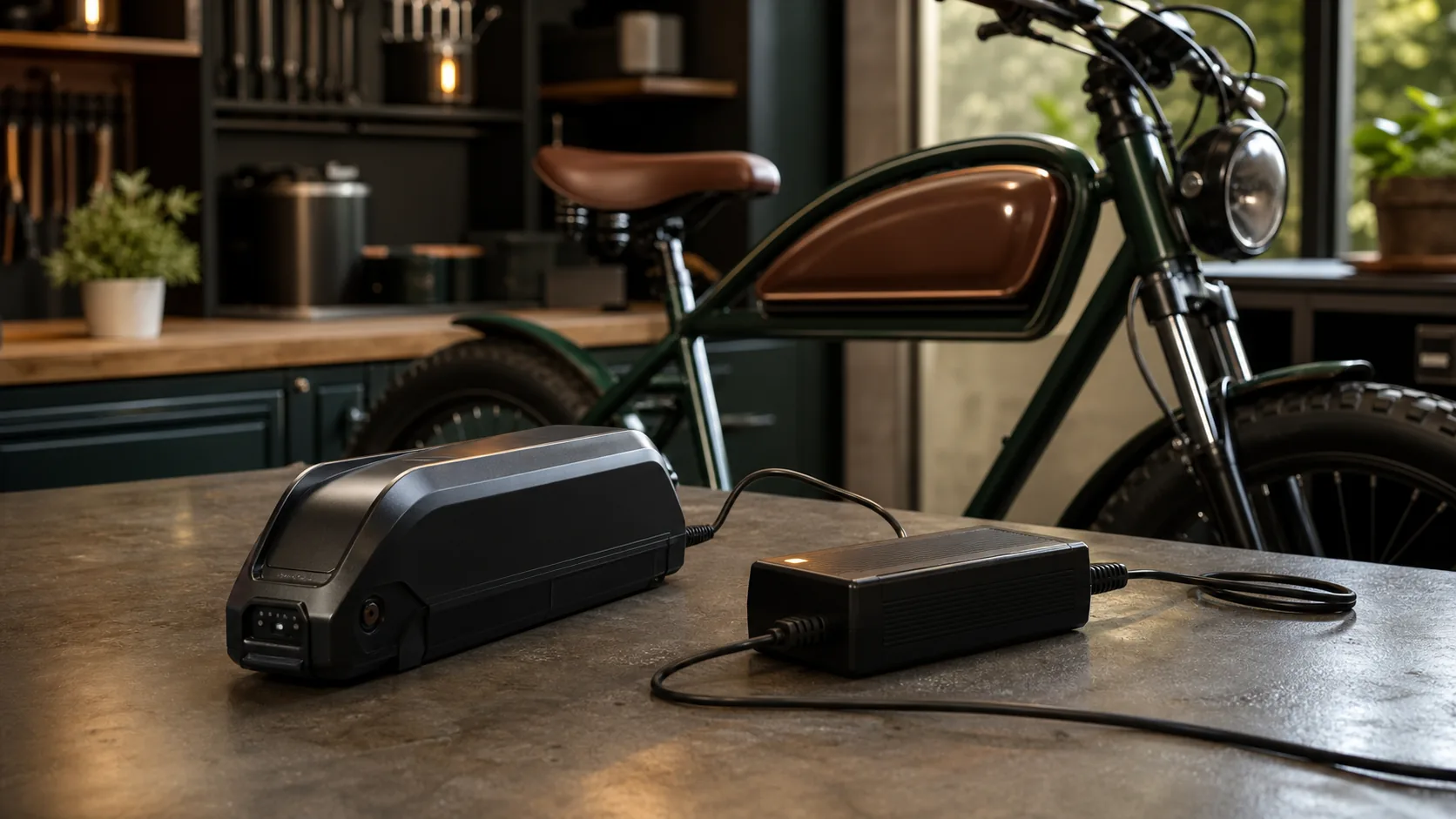
Quick facts
- Full battery charge costs 10p to 19p on standard domestic electricity tariffs.
- Off-peak charging (Economy 7 / EV tariffs) drops costs to 4p to 8p per charge.
- Operating cost is approximately 0.3p to 0.45p per mile.
- A 5-day daily commuter spends less than £3.00 per month on e-bike electricity.
- Saves £900 to £2,400+ per year compared to UK rail fares or petrol motoring.
UK Electric Bike Charging Cost & Commute Savings Calculator
Calculate the exact cost in pence to charge your retro electric bike battery using official UK Ofgem energy price cap rates, and see how much money you save annually versus public transport or a petrol car.
Your Potential Annual Commute Savings:
How to calculate your charging costs
Calculating the cost to charge an electric bike battery is straightforward arithmetic: multiply your battery's watt-hour capacity (Wh) by your electricity tariff (p/kWh), accounting for roughly 15% charging conversion losses.
Use the interactive calculator above to select your battery voltage, capacity, and current electricity tariff. It calculates your exact pence-per-charge, cost-per-mile, and annual commuter savings automatically.
Current UK Ofgem electricity price cap impact
Under the current UK Ofgem domestic electricity price cap, the standard unit rate is approximately 24.5p per kilowatt-hour (kWh).
Because e-bike batteries are compact (typically 0.36 kWh to 0.70 kWh), a complete flat-to-full charge consumes less than a single unit of electricity. For comparison, boiling a domestic kettle 3 times uses more electricity than charging an e-bike for a 35-mile commute.
Commute savings: e-bike vs rail vs car
The economic advantage of a retro e-bike over public transport or a car is staggering:
• Petrol Car: At current UK petrol prices (£1.45/litre) and 40mpg, fuel alone costs ~16.5p per mile. A 12-mile daily round-trip commute costs ~£475/year in petrol alone, excluding insurance, tax, parking, and servicing.
• UK Train / Bus: An average daily return ticket costs ~£6.50, totalling over £1,500 annually for 48 working weeks.
• Retro E-Bike: Running the same 12-mile commute on an e-bike costs approximately £11.50 in electricity for the ENTIRE year—a saving of over £1,400 annually.
Battery charging best practices to prolong lifespan
To ensure your lithium-ion battery lasts 500 to 1,000 charge cycles (3 to 6 years of regular commuting), follow these three proven habits:
1. Avoid running the battery down to 0%. Recharging when the battery reaches 20% to 30% reduces chemical stress on the internal cells.
2. Allow the battery to cool down for 20 to 30 minutes after a long ride before plugging it into the charger.
3. Unplug the charger once the indicator light turns green. Avoid leaving the battery plugged into the mains for days at a time.
How to maximise battery cycle life and health
Lithium batteries perform best between 10°C and 25°C. In the winter, charge your battery indoors at room temperature. Never charge a battery that is frozen (below 0°C), as this can cause irreversible lithium plating and internal short circuits.
Always use the original charger supplied by the manufacturer, or a certified replacement with matching voltage, polarity, and amp ratings.
Useful next steps
Start with the UK electric bike rules hub and the Electric Bike Specs Explained: Motor, Battery, Range, Brakes and Tyres.
FAQs
How long does a retro electric bike battery take to charge from empty?
Using a standard 2-amp (2A) home charger, a 36V 10.4Ah (374Wh) battery takes approximately 4 to 5 hours to charge from flat. A larger 48V 14Ah (672Wh) battery takes roughly 6 to 7 hours with a 2A charger, or 3.5 hours with a 4A fast charger.
Does charging an electric bike battery degrade household electricity bills significantly?
Not at all. Charging an e-bike every working day costs less than £2.50 to £3.50 per month on standard UK electricity rates—less than the price of a single high-street coffee.
Can I charge my e-bike on an off-peak EV tariff overnight?
Yes. If your home has a smart meter and an off-peak tariff (such as Octopus Go or Economy 7 at 7.5p to 12p/kWh), charging between midnight and 5am drops the cost of a full charge to just 4p to 8p.
Is it safe to charge an electric bike battery inside a flat or apartment?
Yes, provided you follow guidance from the London Fire Brigade and Electrical Safety First: charge on a hard, flat surface away from combustible materials, never block exit doors or hallways, never leave it charging unattended overnight, and ensure your home has working smoke alarms.
How much does a replacement e-bike battery cost when the old one wears out?
A replacement battery pack typically costs between £280 and £550 depending on capacity and whether it uses premium Samsung, LG, or Panasonic cells. Over a 4-year lifespan, the battery cost works out to approximately £8 to £11 per month.
Related guides
E-Bike Charging Cost UK: Formula, Battery Sizes and ExamplesCalculate an e-bike charge from battery Wh and your tariff. Compare 360Wh to 960Wh batteries, charging losses, partial top-ups and monthly commuting costs.Electric Bike Battery Range ExplainedUnderstand electric bike battery range, watt-hours, terrain, rider weight, assistance levels and realistic UK commuting margins.36V vs 48V Electric Bike BatteryCompare 36V and 48V e-bike batteries in the UK, including feel, hills, range, weight, replacement support and what to ask before buying.How to Charge an E-Bike SafelyPractical e-bike charging safety advice for UK homes, including chargers, location, supervision, warning signs and storage.