Technical Buying Advice
Hub Motor vs Mid-Drive Electric Bike
Compare hub motors and mid-drive motors for UK e-bike buyers, including hills, maintenance, cost and retro bike suitability.
Quick facts
- Hub motors are usually cheaper and easier to package.
- Mid-drives use the bike's gears and feel more natural on climbs.
- Rear hub motors can make wheel removal more awkward.
- Mid-drives usually wear chains and cassettes faster.
- Motor choice does not remove UK EAPC limits.
What a hub motor feels like to live with
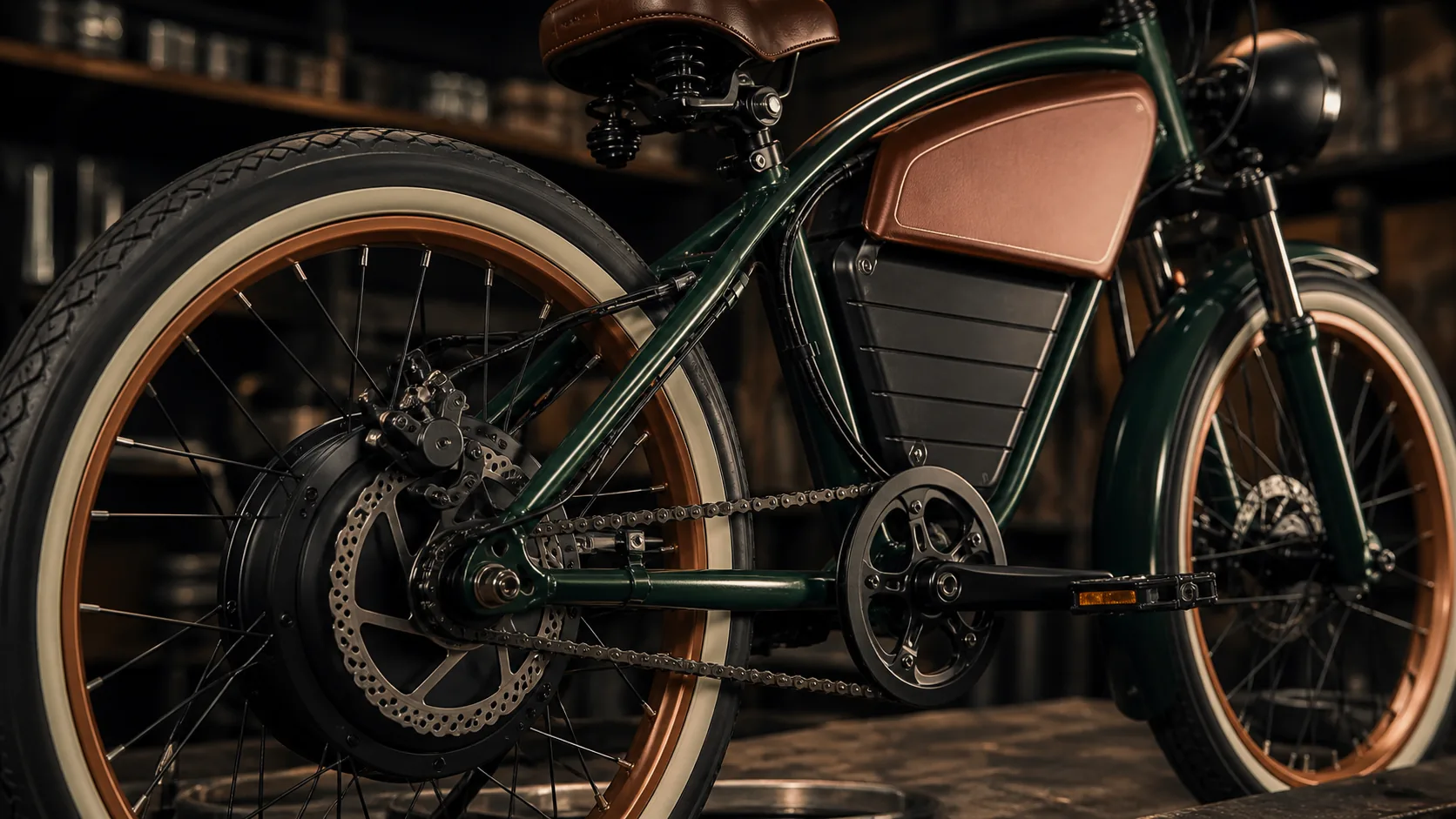
A hub motor sits in the wheel and drives that wheel directly. In day-to-day use that usually means a simple, predictable feel and a system that is easy to understand when you hand the bike to a mechanic.
The trade-off shows up when you lift the bike or deal with a puncture. A rear hub motor can make the wheel heavier and more awkward to remove, which you notice quickly if the bike has to go upstairs or onto a stand.
What a mid-drive feels like on a climb
A mid-drive motor sits near the bottom bracket and adds power through the chain and gears. On the road that often feels more natural, especially when the gradient changes and you want the motor to work with the drivetrain rather than against it.
That smoother hill feel comes with a cost: chains, cassettes and sometimes chainrings take more load, so the service bill can be higher over time.
Which one suits your route?
If your route is flat or gently mixed, a hub motor is often the practical answer. If you ride hills often, carry loads or care more about pedalling feel than simplicity, a mid-drive can be worth the extra cost.
For UK road-legal bikes, rider input still matters. A 250W system is assistance, not a replacement for all pedalling effort.
Where the hidden costs show up
Hub motors usually keep drivetrain wear lower, but they can be more awkward when you need to change a wheel. Mid-drives often make wheel service easier, but they ask more of the chain and gears.
If you want the bike to be easy to maintain at home, ask which parts wear first, which wheel sizes are standard and whether local shops are comfortable servicing the exact system.
| Factor | Hub motor | Mid-drive |
|---|---|---|
| Purchase price | Usually lower | Usually higher |
| Hill feel | Simple and steady | Usually more natural with gears |
| Wheel removal | Can be awkward, especially at the rear | Usually closer to a normal bike wheel |
| Drivetrain wear | Often lighter on chain and cassette | Usually higher over time |
| Best for | Flat or mixed everyday riding | Steeper routes and natural pedalling feel |
Useful next steps
Start with the UK electric bike rules hub and the Electric Bike Specs Explained: Motor, Battery, Range, Brakes and Tyres.
FAQs
Which motor is better for flat city riding?
A hub motor is usually enough and often easier to live with.
Which motor is better for steep hills?
A mid-drive usually feels better because it can work through the bike's gears.
Which one is cheaper to own?
Hub motors are often cheaper upfront and can be kinder to the drivetrain.
Which one suits a retro frame better?
Often a hub motor, because it can keep the frame simple and visually clean.
Should I buy mid-drive just because it sounds premium?
No. The right motor is the one that suits your route, budget and maintenance comfort.
Related guides
Electric Bike Specs ExplainedUnderstand e-bike motors, batteries, range, brakes, tyres, frame size, weight and charging costs before choosing a retro electric bike. Electric Bike Battery Range ExplainedUnderstand electric bike battery range, watt-hours, terrain, rider weight, assistance levels and realistic UK commuting margins.
 Retro Electric Bike for HillsHow to choose a retro electric bike for hilly UK routes, including motor type, gearing, battery margin, brakes, weight and climb feel.
 250W Electric Bike Law UKThe UK 250W electric bike law explained in plain English, including continuous rated motor power, EAPC rules and buyer checks.