Rider Use Cases
Retro Electric Bike for Commuting
How to choose a retro electric bike for commuting, including UK legality, range, lights, mudguards, locks, weight and charging.
Quick facts
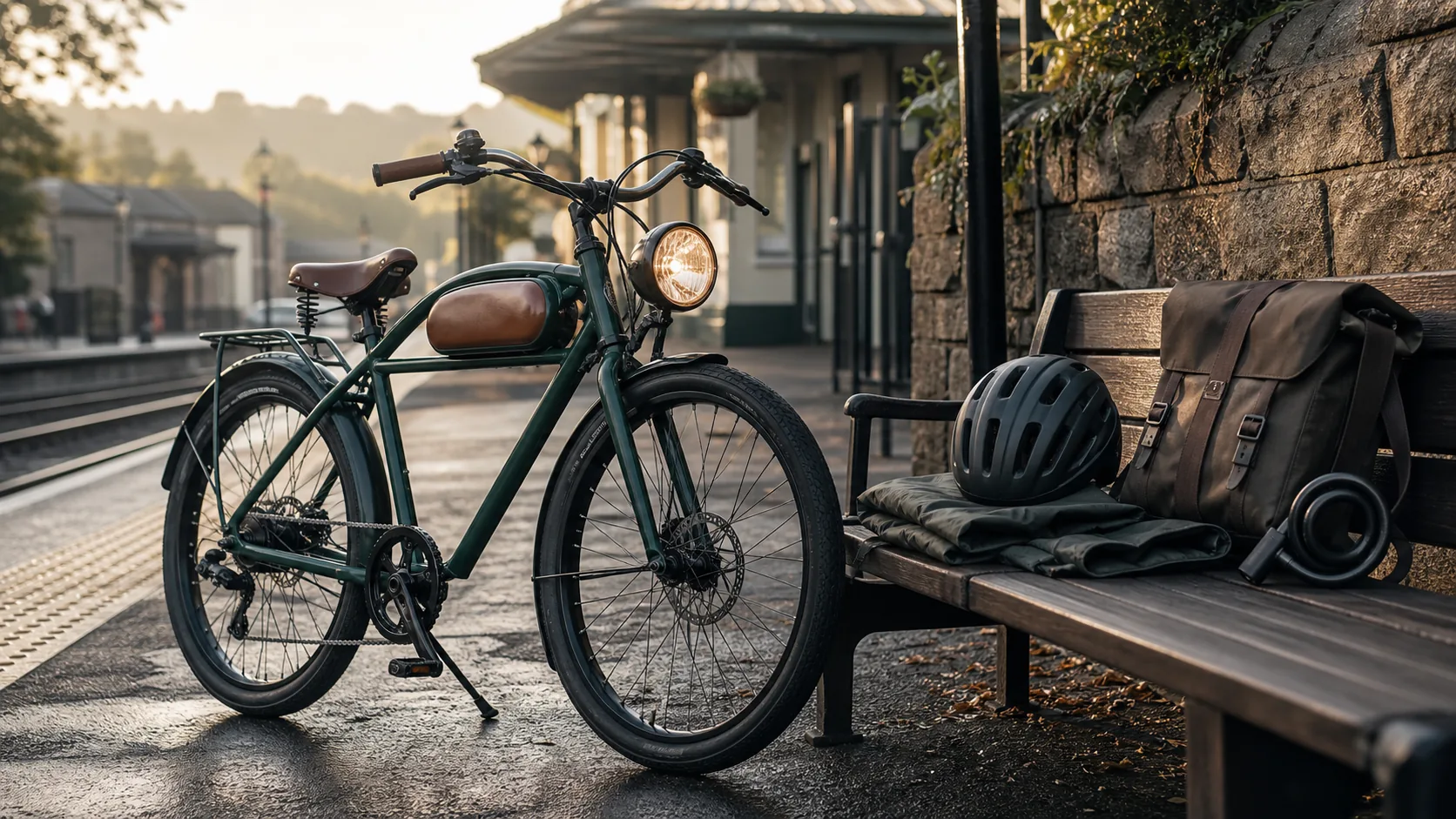
- Commutes need reliability more than novelty.
- Round-trip range should include a margin.
- Mudguards and lights are practical essentials.
- Secure parking and strong locks are part of the cost.
- Battery removal helps flat and office charging.
Start with your actual commute
Measure distance, hills, road quality, parking and charging access. A bike that is perfect for a flat three-mile ride may be wrong for a hilly ten-mile route.
Think about clothing, laptop bags, rain and where the bike will stand during the day.
Legal checks for commuting
If you commute on public roads, use a bike that clearly meets EAPC rules. High-power private-land models are not a sensible commuting shortcut.
Check that lights, reflectors and brakes are suitable for the times and roads you ride.
Range and charging
Choose enough practical range for the return trip plus cold weather and detours. Workplace charging can help, but do not rely on it unless it is allowed.
A removable battery can make charging easier if the bike is stored outside or downstairs.
Security and daily convenience
Budget for serious locks and a parking routine. Retro and moped-style bikes can attract attention, so locking points and battery security matter.
Convenience details such as mudguards, racks and a stable stand often decide whether the bike becomes daily transport.
What usually matters after the first week
The first few wet commutes often expose the bike's real character. If the chain, brakes, mudguards or battery mount start feeling annoying quickly, that is useful information, not a small detail.
A commuter bike should make the routine easier after the novelty wears off. If it only feels good on sunny test rides, it is not a commuting bike yet.
| Commute type | What matters most | What to avoid |
|---|---|---|
| Short city hop | Easy locking, good lights and quick charging | Heavy bike with weak practical extras |
| Mixed suburban route | Range margin, puncture resistance and reliable brakes | Tiny battery and vague support |
| Wet all-weather ride | Mudguards, corrosion resistance and stable handling | Decorative parts that trap dirt and water |
| Office charging | Removable battery and clear storage routine | Fixed battery with awkward carry-in |
Useful next steps
Start with the UK electric bike rules hub and the How to Choose a Retro Electric Bike for Your Riding Style.
FAQs
Is a retro electric bike practical for a 15 to 20 mile round-trip UK commute?
Yes, particularly models with upright Dutch or roadster geometry and 400Wh+ batteries. You can complete a 15-20 mile daily commute without breaking a sweat, arriving in work clothes ready for the day while spending under 10p per journey on electricity.
How do I protect an eye-catching retro e-bike from theft in UK city centres?
Use a two-lock strategy: combine a Sold Secure Diamond rated D-lock (such as a Kryptonite New York or Hiplok D1000) locking the frame and rear wheel to an immovable Sheffield stand, with a secondary heavy cable or chain securing the front wheel. Always take the removable battery and computer display with you.
Can full mudguards and pannier bags be fitted to retro and scrambler frames?
Traditional vintage step-through and roadster e-bikes usually come with integrated mudguards and rear pannier racks as standard. Scrambler-style e-bikes with fat tyres often require bespoke extended moto-fenders and specialist side saddlebag brackets.
Can I charge my retro e-bike battery at work in the UK?
Most UK employers allow e-bike battery charging if the battery and charger are in good condition. Some workplaces require annual portable appliance testing (PAT testing) of your charger plug before allowing it to be connected to office mains circuits.
How do retro e-bikes handle wet, dark winter commuting in the UK?
Retro e-bikes equipped with wide tyres (2.0 to 4.0 inches) offer superior stability on wet manhole covers, wet leaves, and road grit. Ensure your bike is fitted with a powerful StVZO-compliant front headlight (at least 50 lux) and a bright rear LED light wired into the main battery pack.
Related guides
How to Choose a Retro Electric Bike for Your Riding StyleA UK rider-focused guide to matching retro electric bikes with commuting, city riding, hills, rider height and practical storage. Cycle to Work Electric Bike Guide UKHow the Cycle to Work scheme can apply to electric bikes, what UK buyers should check, and how to compare real ownership value.
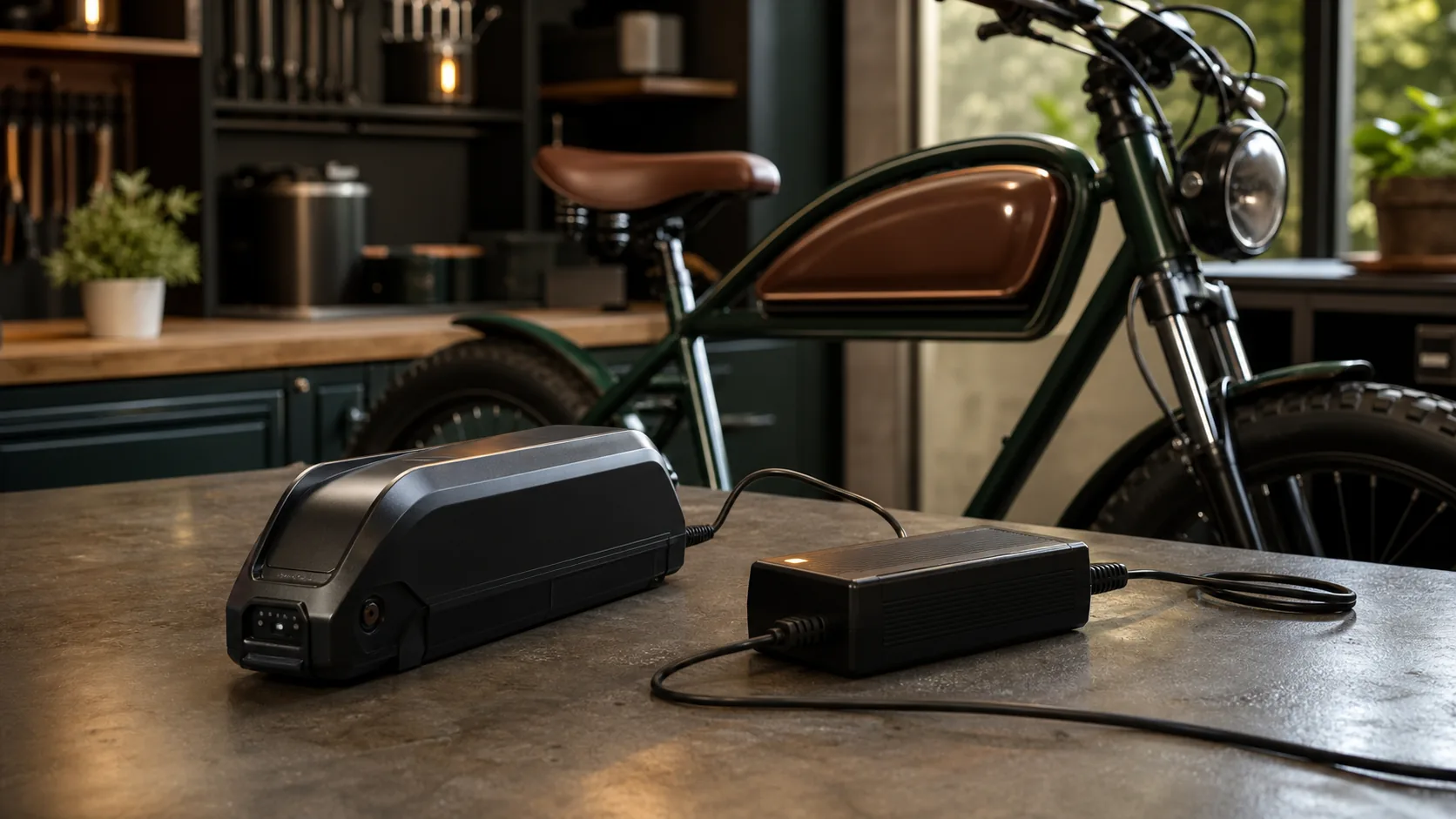 Electric Bike Battery Range ExplainedUnderstand electric bike battery range, watt-hours, terrain, rider weight, assistance levels and realistic UK commuting margins.
 Road-Legal Retro Electric Bikes UKHow to identify road-legal retro electric bikes in the UK using EAPC checks, clear specifications and practical ownership factors.Retro Electric Bike for HillsHow to choose a retro electric bike for hilly UK routes, including motor type, gearing, battery margin, brakes, weight and climb feel.