Retro Electric Bike Buying Guides
Fat Tyre Retro Electric Bike UK Guide
A UK guide to fat tyre retro electric bikes, including legality, comfort, drag, punctures, brakes and road use.
Quick facts
- Fat tyres are legal only if the bike itself meets EAPC rules.
- Wide tyres can smooth rough roads but add drag.
- Correct pressure is important for handling and range.
- Tyre availability can affect long-term cost.
- Heavier fat-tyre bikes need reliable brakes.
Why riders like fat tyres
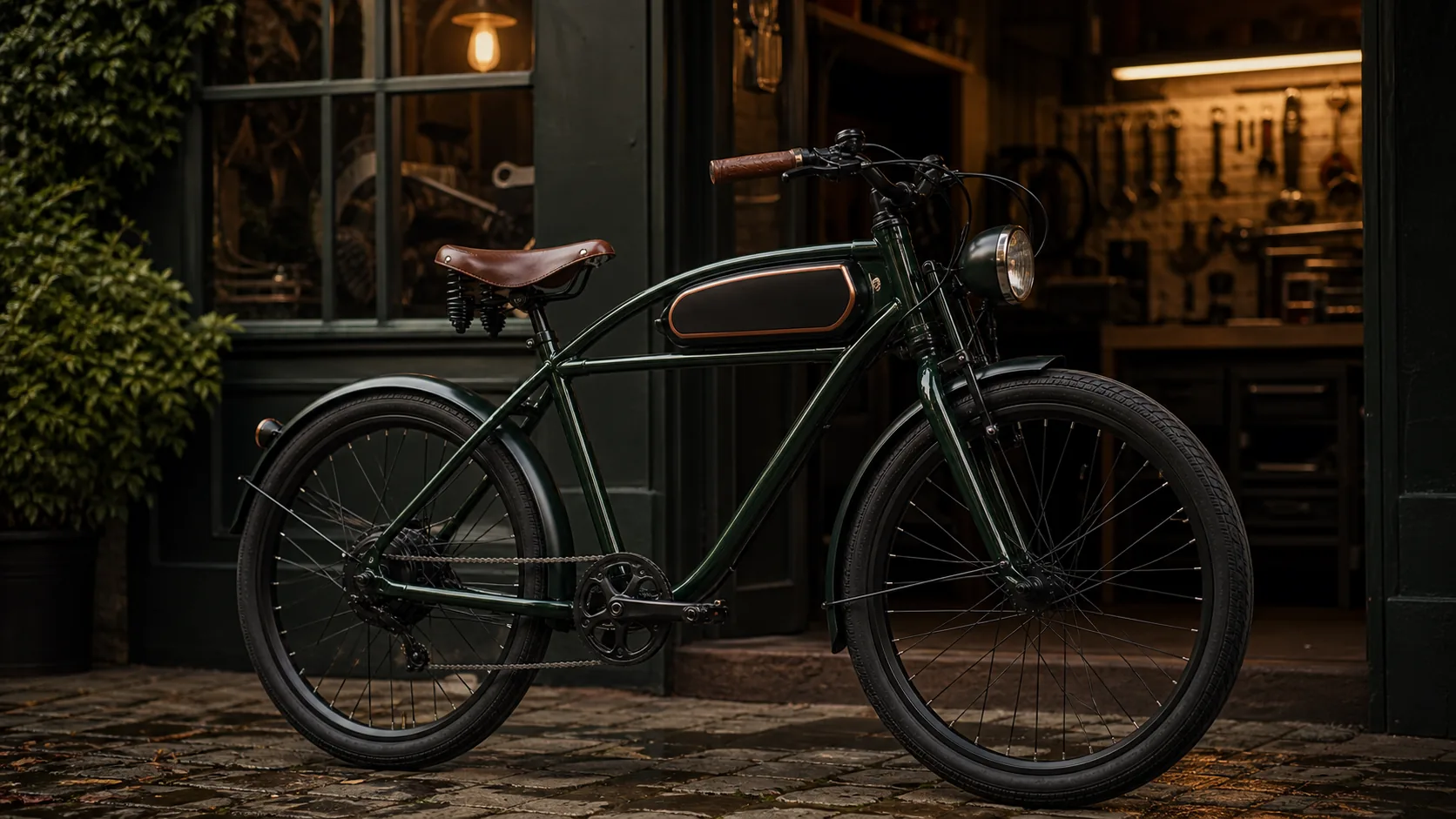
Fat tyres can add comfort, visual presence and grip on broken surfaces. On retro bikes, they often complete the moped-style look.
They can also reduce the sting from potholes and rough lanes, especially when the bike is ridden at sensible speeds.
What are the trade-offs?
Wide tyres usually add weight and rolling resistance. That can reduce range, make lifting harder and make replacement tyres more expensive.
They also need correct pressure. Too soft can feel vague and inefficient; too hard can remove the comfort benefit.
Are fat tyre e-bikes legal in the UK?
Tyre width alone does not decide legality. The bike still needs pedals, a 250W continuous rated motor and assistance that cuts off at 15.5mph.
Be extra cautious because many fat-tyre e-bikes are sold in high-power versions. Check the exact UK EAPC specification.
Maintenance and puncture planning
Fat tyres can be more awkward to remove and carry. Keep the right tube size or repair kit, and check whether local shops are comfortable servicing the wheel and motor arrangement.
Because the bike may be heavy, a roadside puncture can be more than an inconvenience.
Do fat tyres make sense for a tarmac commute?
Start with the surface you ride most often. A smooth-road commute rewards a tyre that rolls comfortably at its approved pressure and has a tread suited to the road. A deep off-road tread can add noise and a different steering feel without solving a problem on that route. Width alone does not tell you the grip, puncture resistance or rolling efficiency of the tyre.
For occasional rough tracks, compare the complete bike's permitted use and tyre options. Large tyres do not make an unsuitable frame, fork or wheel ready for jumps, deep mud or unrestricted trail use. Ride around potholes where safe rather than using tyre size as permission to hit them.
Choose pressure from the actual tyre and bike instructions
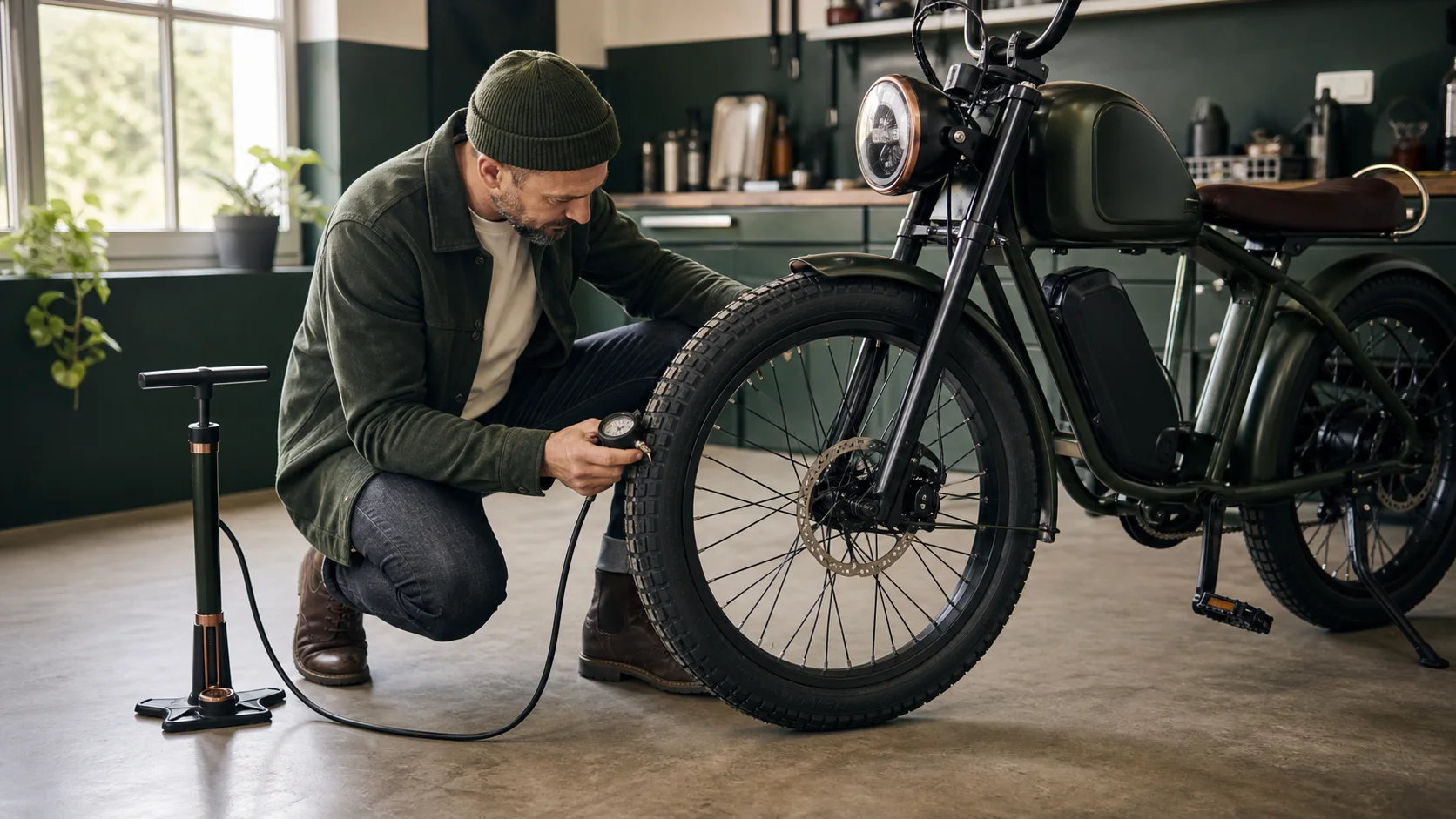
There is no safe universal PSI setting for every fat-tyre e-bike. Find the limits specified for the tyre, rim and bicycle, and use a gauge that reads the relevant range accurately. Start with the manufacturer's recommendation for your load; front and rear settings may differ.
Measure when the tyres are cold. Include luggage in the load you assess and recheck after a temperature change. If the ride feels unstable or the tyre repeatedly loses air, inspect it or ask a technician before experimenting further. Do not lower pressure below the permitted range just to imitate a soft suspension ride.
Order replacement tyres by size, not by appearance
Photograph every size marking on the sidewall, including the ETRTO code where present. This identifies dimensions more precisely than a phrase such as '20-inch fat tyre'. Confirm the approved width range and clearance around the frame and mudguards before choosing another tyre.
Ask a local shop whether it will work on the complete bike and whether it can support a rear hub-motor wheel. Keep the answer, compatible tube details and a puncture plan with your routine maintenance notes. For a daily commute, repair access can matter more than the initial price of the tyre.
Useful next steps
Start with the UK electric bike rules hub and the Retro Electric Bike Buying Guide UK: How to Choose a Vintage-Style E-Bike.
FAQs
What are the main disadvantages of fat tyre electric bikes in the UK?
The main disadvantages of 4-inch fat tyre e-bikes are substantial weight (often 28kg to 34kg), increased rolling resistance reducing battery range by 15% to 25%, difficulty fitting on standard UK train cycle racks and car boot carriers, and higher puncture repair complexity with rear hub-motor wheels.
What tyre pressure (PSI) should I run in 20x4 or 26x4 inch fat tyres?
For road and urban tarmac riding, run 20 to 25 PSI to reduce rolling resistance and battery drain while maintaining puncture protection. For loose gravel, wet towpaths, or sandy trails, lower pressure to 12 to 16 PSI for enhanced traction and cushioning. Never drop below the minimum sidewall rating.
Can you take a fat tyre retro electric bike on UK trains?
It depends on the train operating company. Many UK rail operators (such as LNER, Avanti, and GTR) restrict bicycles with tyre widths exceeding 2.5 inches (65mm) from hanging cycle racks. Always check your specific train operator's cycle carriage rules before travelling.
How do fat tyre e-bikes perform on wet UK tarmac and autumn leaves?
The wide contact patch provides excellent stability over slippery manhole covers, drain grates, and broken asphalt. However, knobby off-road tread patterns can have reduced wet grip on smooth tarmac compared to road-oriented semi-slick tyres. Choose street-tread fat tyres for city commuting.
How do I prevent punctures on a fat tyre retro e-bike?
Install liquid tyre sealant (e.g. Slime or Muc-Off) inside the inner tubes, fit heavy-duty puncture-resistant tyre liners (such as Tannus Armour), and keep tyres inflated to at least 20 PSI on urban roads to prevent pinch flats from sharp pothole edges.
Related guides
 Electric Bike Tyre Pressure Guide UKHow to choose and check tyre pressure on heavier retro e-bikes for comfort, grip and range.
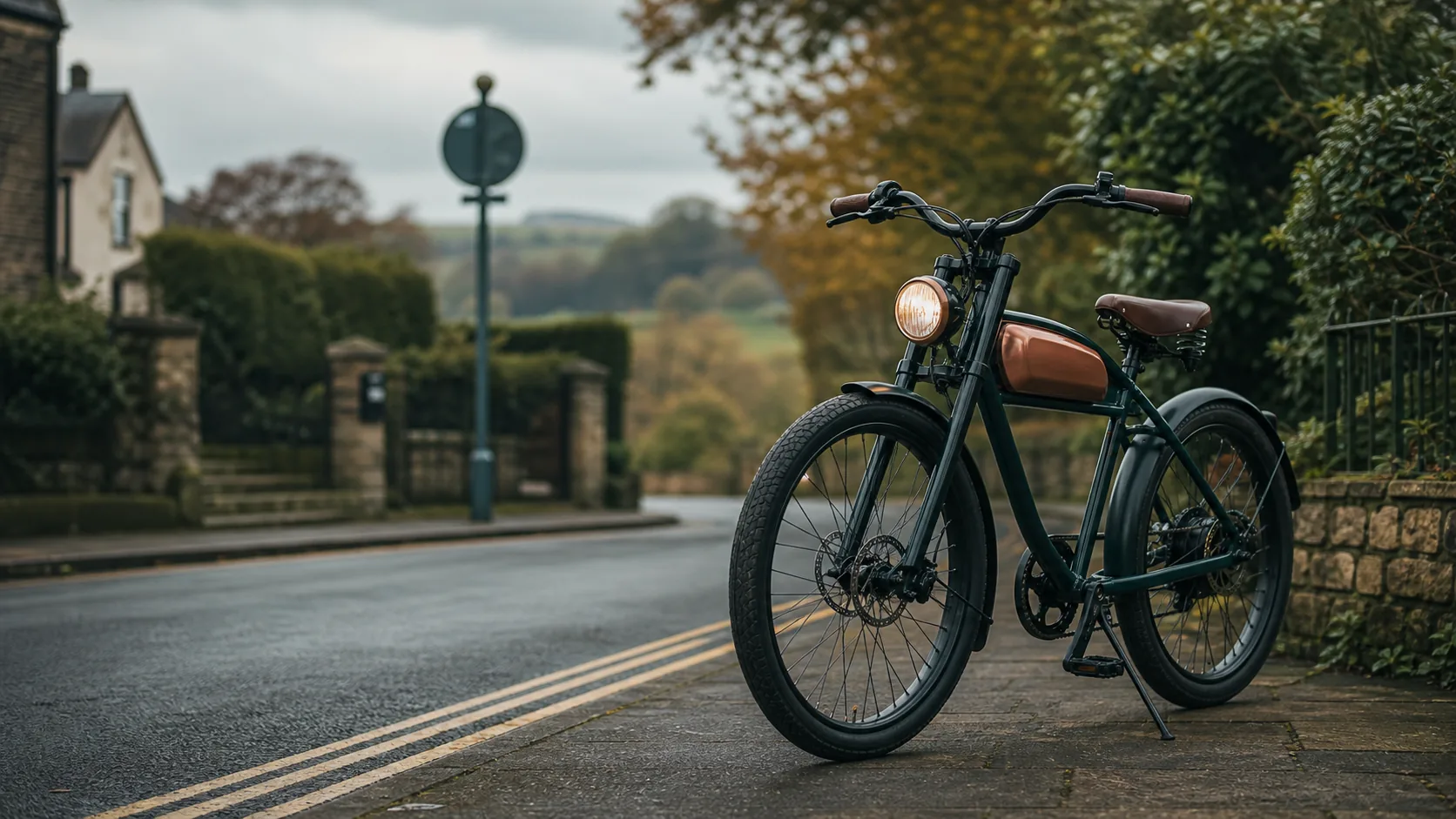 Road-Legal Retro Electric Bikes UKHow to identify road-legal retro electric bikes in the UK using EAPC checks, clear specifications and practical ownership factors.
 Electric Bike Maintenance ChecklistA practical UK e-bike maintenance checklist covering tyres, brakes, chain, battery, bolts, lights and when to use a mechanic.
 Electric Bike Battery Range ExplainedUnderstand electric bike battery range, watt-hours, terrain, rider weight, assistance levels and realistic UK commuting margins.