
Technical Buying Advice
36V vs 48V Electric Bike Battery
Compare 36V and 48V e-bike batteries in the UK, including feel, hills, range, weight, replacement support and what to ask before buying.
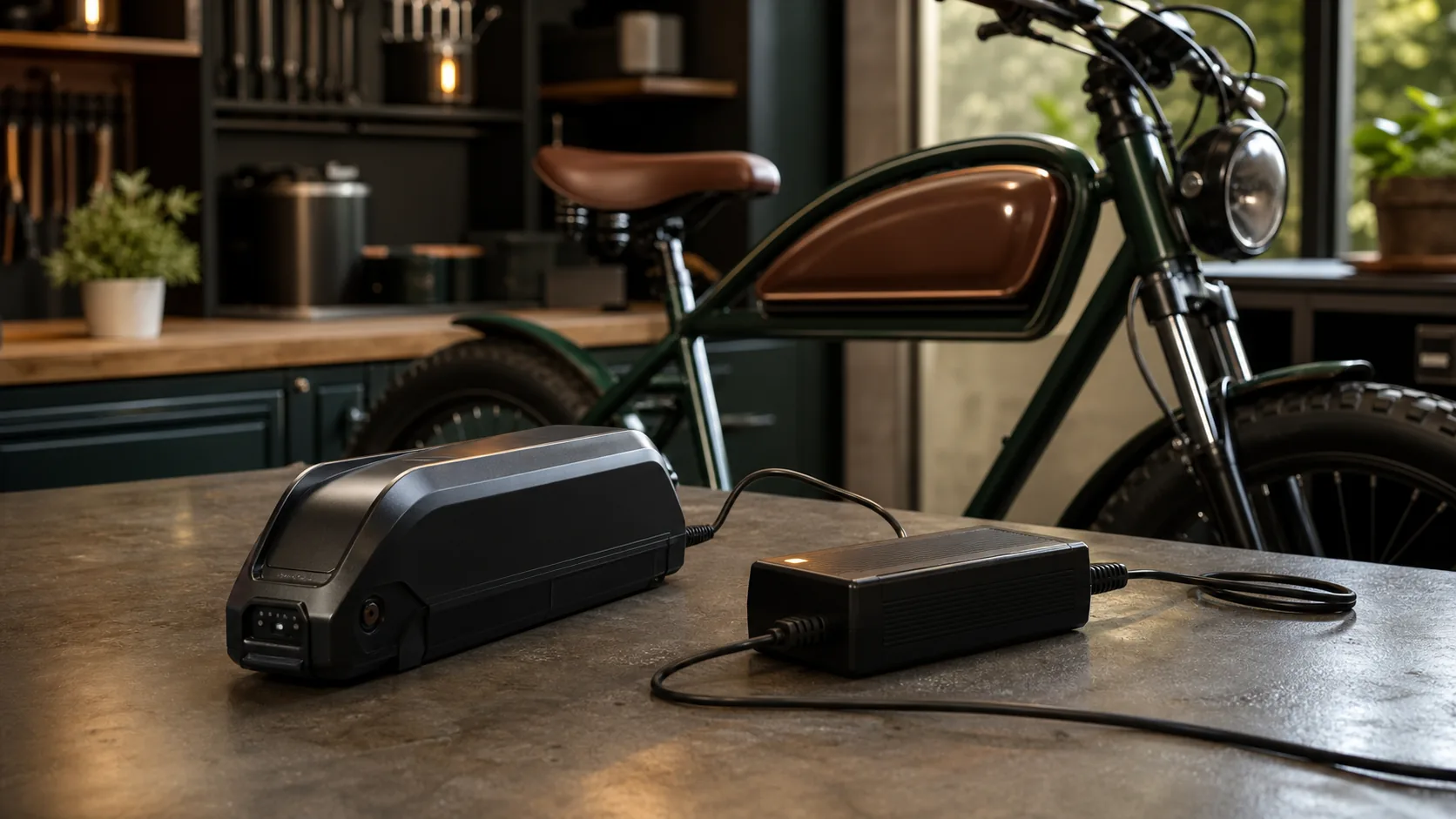
Quick facts
- Voltage affects how the system delivers power, not just how far it goes.
- Watt-hours still tell you how much energy the battery stores.
- 36V can be enough for flat, lighter riding.
- 48V can feel stronger on hills and with heavier riders.
- Replacement support matters as much as the label.
What voltage actually changes
Higher voltage can give the controller more headroom and often feels more eager off the line, but only within the rest of the system.
The rider usually notices feel before numbers: a 48V bike can seem more relaxed on a climb, while a 36V bike can feel perfectly normal on flatter, lighter-duty routes.
Why watt-hours still matter more
Voltage alone does not tell you battery size. Two batteries can both be 48V and still store very different amounts of energy.
If you are comparing bikes, watt-hours are still the safer number to use for range and practicality.
When 36V makes sense
Thirty-six volt systems can be a good fit for short flat commutes, lighter retro frames and riders who want a bike that feels simple and easy to live with.
If your route is already easy and you do not need a lot of reserve, 36V may be enough without adding unnecessary weight or cost.
When 48V makes sense
Forty-eight volt systems can be a better match for hillier routes, heavier riders, loaded commuting or bikes that need a bit more reserve under stress.
That extra reserve is not free. The bike may cost more, weigh more or lock you into a more specific replacement battery later.
What to ask before you choose
Ask for the exact watt-hours, not only the voltage. Check the replacement battery route, charger compatibility and whether the bike weight still works for your life.
If the seller can only answer with marketing phrases, the spec may not be as straightforward as it looks.
| Factor | 36V | 48V |
|---|---|---|
| Typical feel | Often calmer and lighter-duty | Often punchier and more assertive |
| Best fit | Flat, shorter, bike-like rides | Hills, heavier bikes and more reserve |
| What to compare | Wh, weight, charger and replacement availability | Wh, weight, charger and replacement availability |
| Hidden trade-off | May feel underpowered on steep routes | Can cost more and be heavier |
Useful next steps
Start with the UK electric bike rules hub and the Electric Bike Specs Explained: Motor, Battery, Range, Brakes and Tyres.
FAQs
Is 48V always better than 36V?
No. It only wins if the rest of the bike and your route justify the extra voltage.
Can a 36V bike have more range than a 48V bike?
Yes, if the 36V battery has more watt-hours or the bike is lighter and more efficient.
Should I choose by voltage alone?
No. Compare watt-hours, weight, controller tuning and replacement battery support as well.
Does higher voltage mean more speed?
Not by itself. The legal limit and controller setup matter just as much.
What should I ask the seller first?
Ask for the exact watt-hours, total bike weight, charger details and the replacement battery route.
Related guides
 Electric Bike Specs ExplainedUnderstand e-bike motors, batteries, range, brakes, tyres, frame size, weight and charging costs before choosing a retro electric bike.Electric Bike Battery Range ExplainedUnderstand electric bike battery range, watt-hours, terrain, rider weight, assistance levels and realistic UK commuting margins.How Long Do E-Bike Batteries Last?How long electric bike batteries last, why capacity fades, and what UK riders can do to improve battery life and safety.E-Bike Charging Cost UK: Formula, Battery Sizes and ExamplesCalculate an e-bike charge from battery Wh and your tariff. Compare 360Wh to 960Wh batteries, charging losses, partial top-ups and monthly commuting costs.Electric Bike Battery Safety UKUK e-bike battery safety guidance covering charging, storage, warning signs, damaged batteries and safer buying habits.