UK E-bike Law and EAPC Rules
EAPC vs Moped UK: Key Differences
Compare EAPCs and mopeds in the UK, including power, speed, licences, insurance, registration and rider expectations.
Quick facts
- EAPCs feel and behave like bicycles with assistance.
- Mopeds bring paperwork, plates, helmets and insurance.
- A heavy retro frame can push the practical choice toward moped-like use.
- Style does not decide the legal class.
- The best choice depends on the route you actually ride.
What changes on a normal day
An EAPC is easier to think of as a bicycle with help. You can carry it, lock it and store it with the same sort of planning you would use for a regular bike, even if the frame is heavier.
A moped is more like a small motor vehicle. Once you own one, the extra obligations show up in parking, paperwork, insurance, clothing and service routines.
Why the category is easy to blur
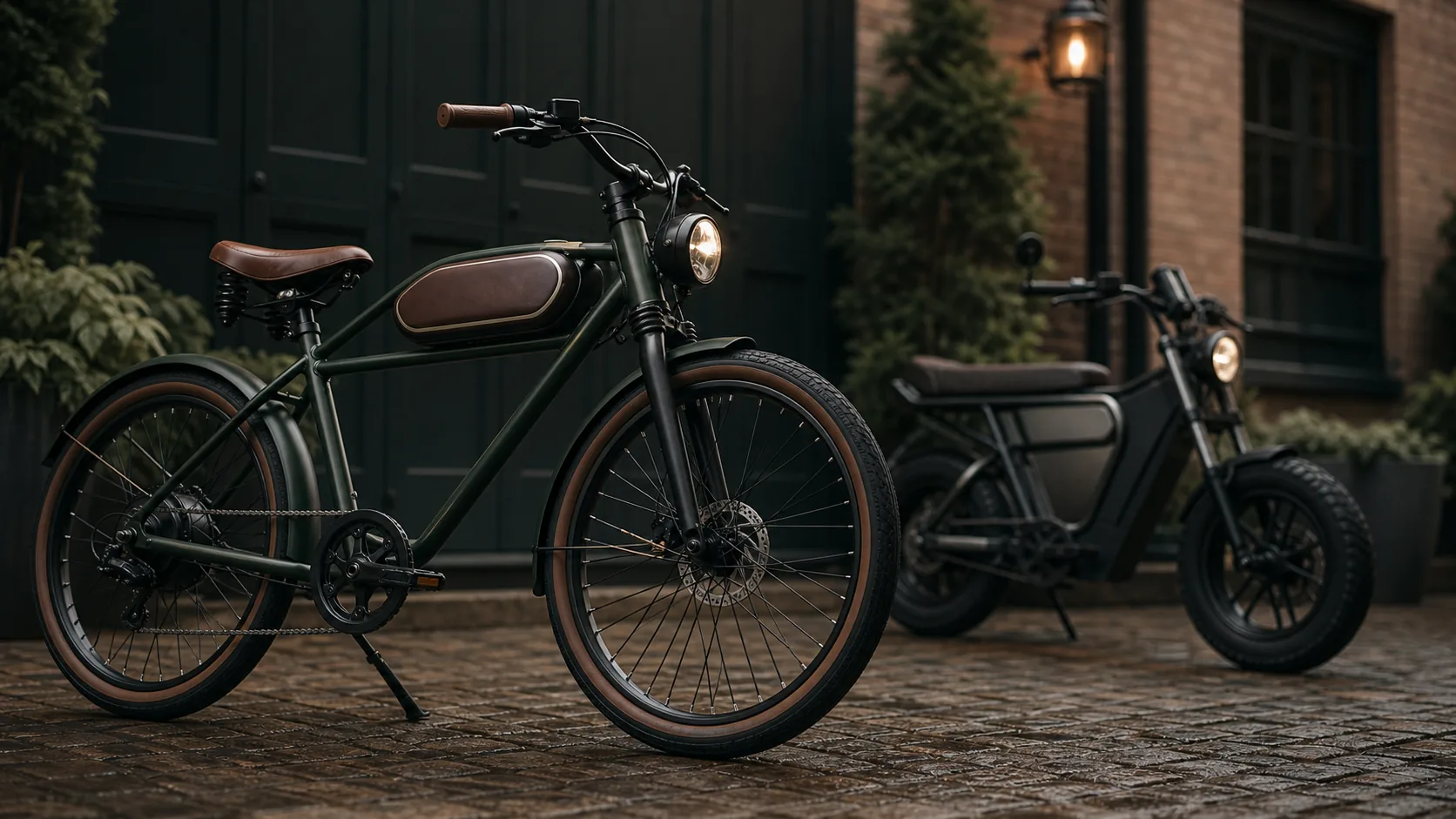
Moped-style e-bikes can look nearly identical while sitting on opposite sides of the legal line. A retro frame, tank-like battery cover or bench seat does not tell you enough on its own.
The only safe way to compare them is to check the actual specification and decide whether you want a bicycle-like ownership model or a vehicle-like one.
Who each option suits
Choose an EAPC if your ride is short to medium distance, if you want cycle lanes and simpler storage, or if you want to keep the bike close to bicycle rules.
Choose a moped if the journey really wants more motor performance and you are comfortable treating the vehicle as part bike, part motorbike in everyday ownership.
How to decide before you spend
Ask whether the bike is easier to lift, easier to charge and easier to store than the moped alternative. If the answer is no, the moped route may be the more honest comparison.
Do not buy a high-power e-bike and assume the pedals will save the day. The legal class is decided by the real specification, not the styling.
| Feature | Compliant EAPC | Moped or motorcycle route |
|---|---|---|
| Daily feel | Bicycle-like with assistance | Vehicle-like with motor focus |
| Storage and lifting | Often manageable as a heavy bike | Usually more awkward and space hungry |
| Licence and paperwork | Not normally required if compliant | Usually required |
| Insurance and plates | Not normally required by EAPC rules | Required |
| Best for | Short to medium rides and simple ownership | Motor-led commuting and longer trips |
Useful next steps
Start with the UK electric bike rules hub and the UK Electric Bike Rules: 250W, 15.5mph and EAPC Law Explained.
FAQs
What is the simplest way to choose between the two?
Decide whether you want bicycle-like ownership or motor-vehicle-like capability. That usually answers the question faster than power numbers.
Can a moped-style e-bike still be an EAPC?
Yes, if the real specification fits the EAPC rules. Styling alone does not decide the class.
Why do some people regret buying the wrong class?
Because they picked the look first and only discovered the storage, paperwork or route issues later.
Should I compare on speed alone?
No. Ride quality, storage, insurance and legal simplicity matter at least as much.
What is the safest buying mindset?
Choose the vehicle class that matches the journey you actually ride, not the one that sounds most exciting on the listing.
Related guides
Electric Bike vs Electric Moped UKCompare electric bikes and electric mopeds in the UK, including legal status, speed, insurance, licences, cost and practical use. Is a 750W Electric Bike Legal in the UK?Understand why 750W electric bikes are usually outside ordinary UK EAPC limits for public roads and what private-land claims mean.
 Moped-Style Electric Bike UK GuideA UK guide to moped-style electric bikes, including EAPC compliance, comfort, weight, throttles and when a bike may be a moped.Do You Need a Licence for an E-Bike UK?UK electric bike licence rules explained, including EAPCs, rider age, high-power bikes and moped-style alternatives.